9 Inspirational Business Holiday Cards by Anastasia Salazar

The holiday season is upon us again, and ‘tis the season for making decisions on holiday cards that delight, excite, and showcase your playful side. Business holiday cards are a fun way to go beyond sales and business transactions; they are an opportunity to reach out in the season of festivities and celebrate together. If you can be creative and intentional while also reminding clients what you’re all about, the cards will be all the merrier. Get festive with these tips and ideas for the best way to say, “Happy Holidays!”

What Makes a Memorable Holiday Card?

  • Be Festive: This may sound obvious, but agency holiday cards without festive energy may blend in with other assets and risk being ignored. If it’s a holiday card, it should look and sound like one.

  • Spark Joy: Don’t forget about the core purpose of any holiday card. It should make you feel happy when you get one. Of course the other principles are important, but first and foremost, holiday cards should feel lighthearted and incite excitement for the season ahead.

  • Be True to Your Brand: Business holiday cards are an opportunity to remind clients what you’re passionate about. If environmental causes are at the core of your values, this is the time to use that environmentally friendly paper or feature advocates that align with your causes. Whatever you decide to send, keep your company values and culture in mind.

  • Have Personality: Trade in the stock images for customized designs that give your holiday cards some character. Add a fresh take to classic holiday imagery by playing with different materials and textures, creating your own flavor to the candy canes and string lights we all know and love.

  • Be on Brand (But Throw in Some Glitter!): The tone and visuals should resemble that of your branding, but you can (and should) infuse some holiday spirit. It’s okay to deviate a little from your traditional color palette and celebrate the occasion; just make sure it still sounds and looks like you.

What Should You Avoid?

  • Sales Pitches: While holiday cards might add value to your brand and eventually lead to more sales, the primary focus of business holiday cards is not to sell. Instead, let loose and offer a warm greeting.

  • Specifying Religions: Unless your business is founded upon a common belief system, it is unwise to specify religions on agency holiday cards. Acknowledging only one holiday in the month of numerous holidays risks excluding clients and prospective clients.

  • Using Swag Exclusively as Logo Carriers: Desirable swag requires plenty of thought and top-notch execution. Flimsy, clunky, or disposable products with oversized logos will likely become junk that is tossed.

    RELATED: 30+ Business Swag Ideas That Make Awesome Holiday Gifts

Business Holiday Cards We Love

‘Twas Twenty Twenty: Colle McVoy provided a moment of reflection for the eventful year that was 2020 by tucking facts and news about the year into a hidden picture game. Players walked through fun facts by clicking on hidden items in whimsical illustrations. Some relatable facts about the year of quarantine (“Animal shelters across the country saw a 90% increase in foster pet applications.”), and some heartwarming facts from some dark times (“1 million people found laughter during isolation by posting pics of costume-themed garbage bin outings”) made for a cozy gift.


Just Curious: Curiosity invited folks to celebrate the season by way of dialogue. With a brand philosophy centered around the idea of asking questions, this question-based game not only provided a way to reconnect with others but it also served as a clever nod to their brand messaging.


Window Gift Guide: In this season of giving, Empower put their windows where their mouth was, using their windows as panels of a gift guide of products from local businesses. Empower’s windows put their support for local businesses on display, communicating their brand values and providing an interactive way for clients and passersby to reflect on their lists.


Fight the Boredom: This gift of anti-boredom provided respite from the endless days of quarantine in 2020, complete with recipes, card games, quizzes, and a physical deck of cards. Pound & Grain sent greetings that were thoughtful and timely.


Celebrity Advent Calendar: Primacy sent celebrity videos via Cameo for an online advent calendar, each celebrity sharing snippets of their year. Recipients were able to feel a sense of connection with familiar celebrities each day, and the company was able to feature celebrities of their choice, opening the door to select those with beliefs or causes that align with their own.


Gift Box: Bindery sent out cupfuls of cozy by way of holiday cocktail and mocktail kits, including branded spoons, marshmallows, mugs, and more. Rather than ill-fitting clothes with large logos that end up at the back of your closet, Bindery incorporated their logo tastefully in polished bottles and packages.


Nog Pong: A brand messaging of imagination, creativity, and energy were fully embraced by Saatchi & Saatchi LA in creating Nog Pong, a variation of beer pong using egg nog. Players made shots via a robot, and watched live online as they made shots. Shot-based donations were made toward a dog rescue foundation, shrewdly displaying their easy-going work culture and their brand values simultaneously.


Written in the Stars: AKQA created a beautiful way to send a greeting to loved ones by carving them out in stars. This card allowed users to project 3D messages into the virtual “sky,” boasting their skill in design and allowing for users to connect with one another.


The Great Excheeriment: Agency holiday cards were sent from Bozell to clients for their personal use. In a practical move, the cards showed off their design chops while also providing opportunities for brand recognition when those letters were sent out. Also, who wouldn’t be happy to have some extra cards for that long list of friends and family members?


The holiday season brings with it a wealth of possibilities in the realm of business holiday cards. Taking the opportunity to show some heart and creativity will surely reach your clients with sincerity. Add in the bonus of showing off who you are as a company, and you’ve got all the ingredients of a business holiday card that will be remembered all year round.

Anastasia Salazar Ltd. is an independent design studio for tailored branding and digital designs. Reach out to learn how we can help you fuel growth and maximize your brand’s impact.

How to Thrive in Branding for Tech Companies by Anastasia Salazar

ASL_Design-Blog-Tech-Branding-v1_Website.png

If you named a few cloud storage platforms, you’d probably name a few of the top tech companies, like Google Drive and Dropbox. But looking at the sheer number of companies offering similar products the question is, what’s the secret to becoming a known and trusted brand? 

It’s true, strong tech brands back their value through their features, products, data, and the cold hard numbers. Even so, this is all for naught without consistent communication--that’s where solid branding becomes key, especially for start-ups.

Branding helps build recognition and customer loyalty by showing consumers that your company is valuable and trustworthy. But branding for tech companies is unique--for one, you’re often selling a product or service that you can’t touch and feel. And while infographics and product illustrations can help explain how your platform works, it’s often harder than showcasing a physical product.

The Must-Haves of Good Tech Branding

Showing Humanity: In an industry selling digital products and services, it’s important to show that you’re human. Have fun, and show off your personality a little bit. Take Dropbox for example. At the beginning of the COVID-19 pandemic, they sent digital care packages to their partners filled with activity books, reading material, art, and self-care and meditation information. In an unconventional move, Dropbox offered a digital warm hug that set them apart.

Considering Your Medium: Don’t forget that many of your deliverables will be digital. This means understanding that branding will need to be scalable, with a digital color palette. Creating grid structures and reusable modules are good options when you need a consistent system for digital assets that move fast.

Tapping into Your Data: Top tech companies often have a lot of data at hand. You can use this information to tailor your approach. Decisions informed by data create ads, headlines, and content that are more relevant to your consumers. 

Building Trust: Trust is essential in tech--not just when it comes to reassuring your audience that your product can deliver on the hype, but also because consumers and businesses share personal, sensitive information through tech products. They need to know that their personal information is secure when using platforms like a cloud storage service, and this requires building trust. This is where strong, well-thought-out branding comes into play--combine an authentic brand voice, polished visual system, and a great product to boot, and a loyal consumer base will follow.

Successful dovetailing of branding and product design defines top tech companies. Spend more time on product design than on branding, and the customer is bound to see the disconnect. Branding should represent the quality of the product, and the product should perform the way that it was advertised. Sincerity and transparency are key in building customer trust.

Building trust doesn’t just benefit consumers, though. A company that is trustworthy is a company where employees want to work, too. In an oversaturated market, people take note when a company is credible.

Being Consistent: Consistent messaging and visual systems go a long way toward building brand affinity. Do the extra work of developing a brand identity with clear guidelines, and you’ll ensure that design work gets done quickly and fits with your overall vibe. Updating guidelines regularly will help everything stay on-brand, allowing you to do right by your business and products.

Being Flexible: While consistency is critical for tech branding, you also want to leave room for a certain amount of flexibility. With so many creative assets--digital ads, landing pages, company swag, and more--you don’t want design that gets repetitive or stale. You can opt for a variable typeface, for example, that works in a variety of settings while shifting weights and widths depending on the application.

Tech Branding Done Right

In the tech world, companies too often forget that buying something is an emotional decision. Conveying a distinct personality can set you apart from other brands, and get you that emotional buy-in you need from the consumer.

Here are a few examples of companies that lean into a clear and distinct brand identity:

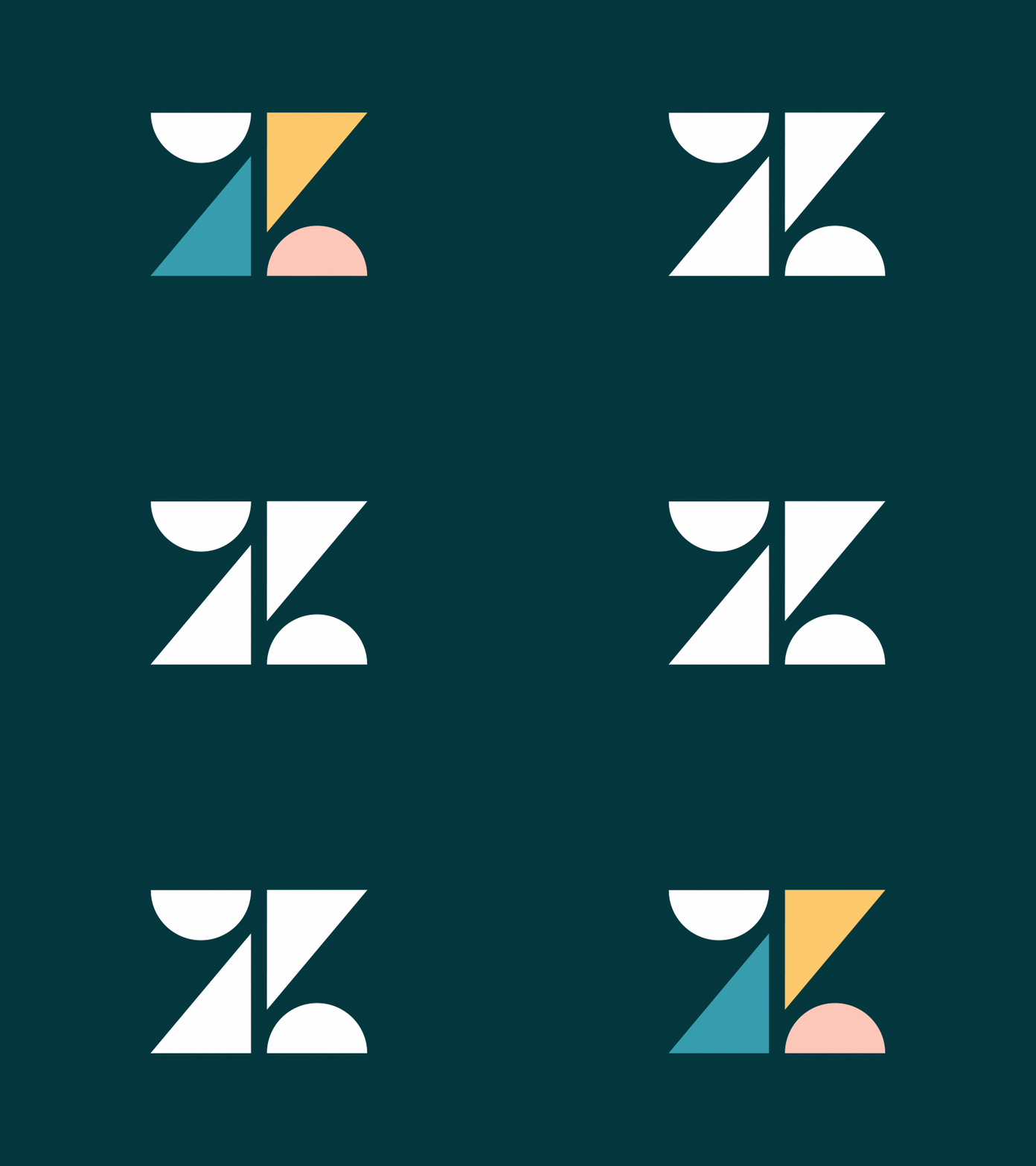
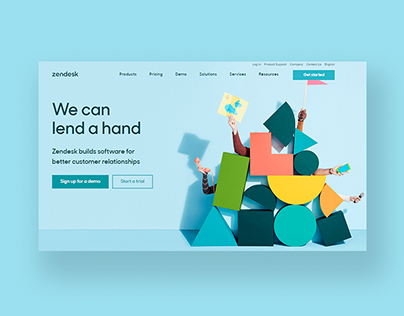
  • Zendesk: The warmth and personable feel of Zendesk makes customer service approachable and down to earth. The easy and helpful tone distinguishes Zendesk from other B2B companies, which generally tend to have weaker branding than B2Cs.

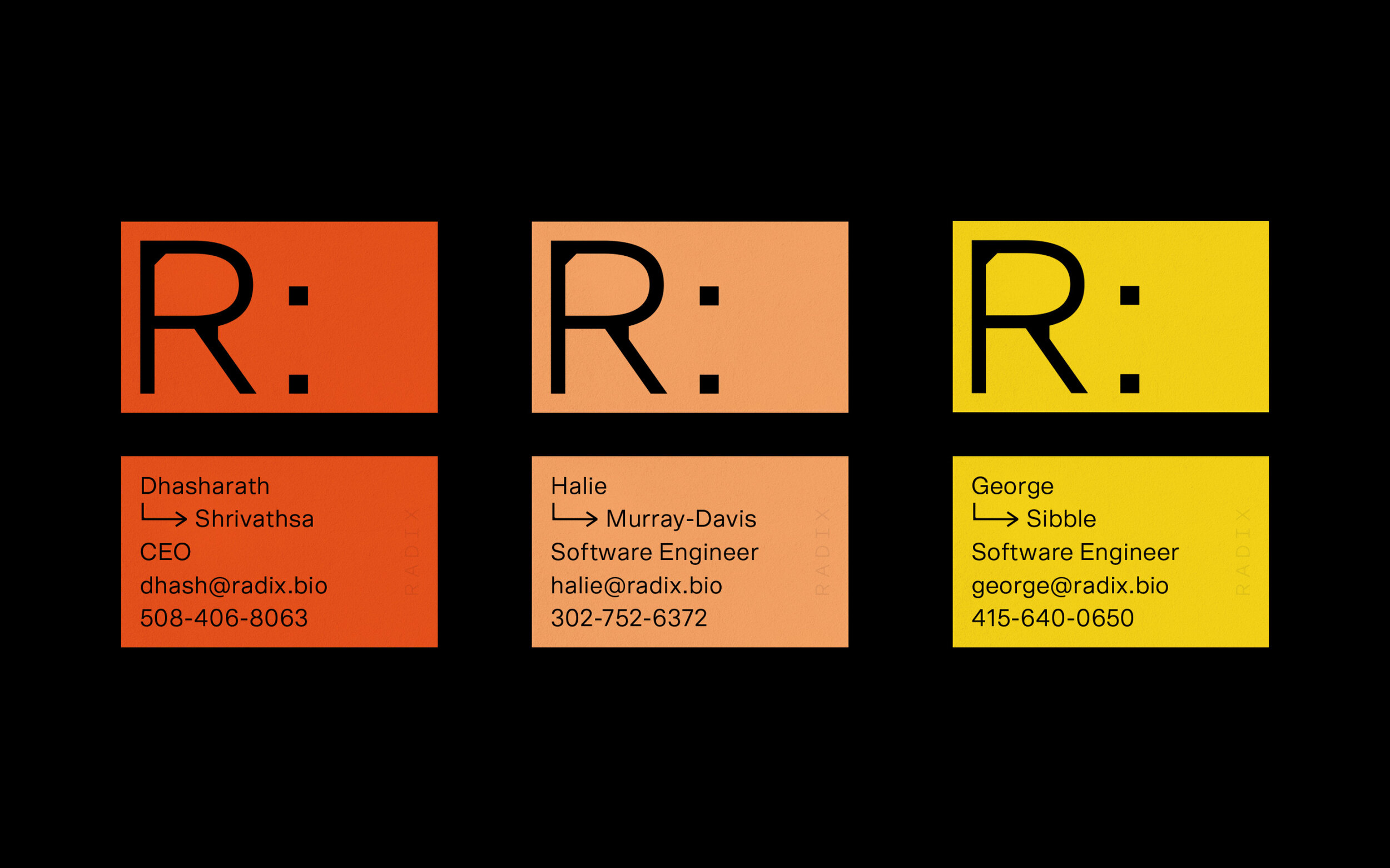
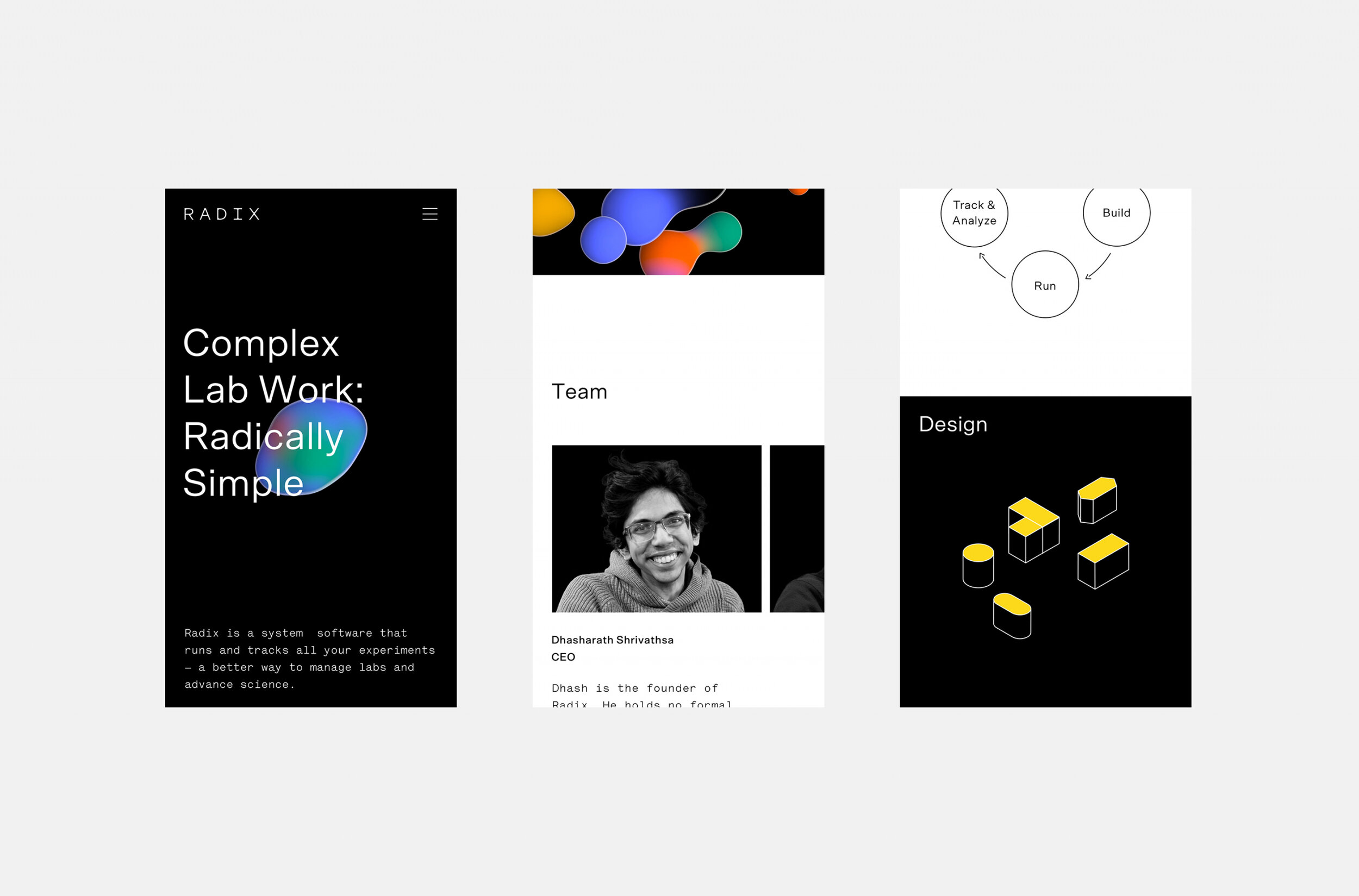
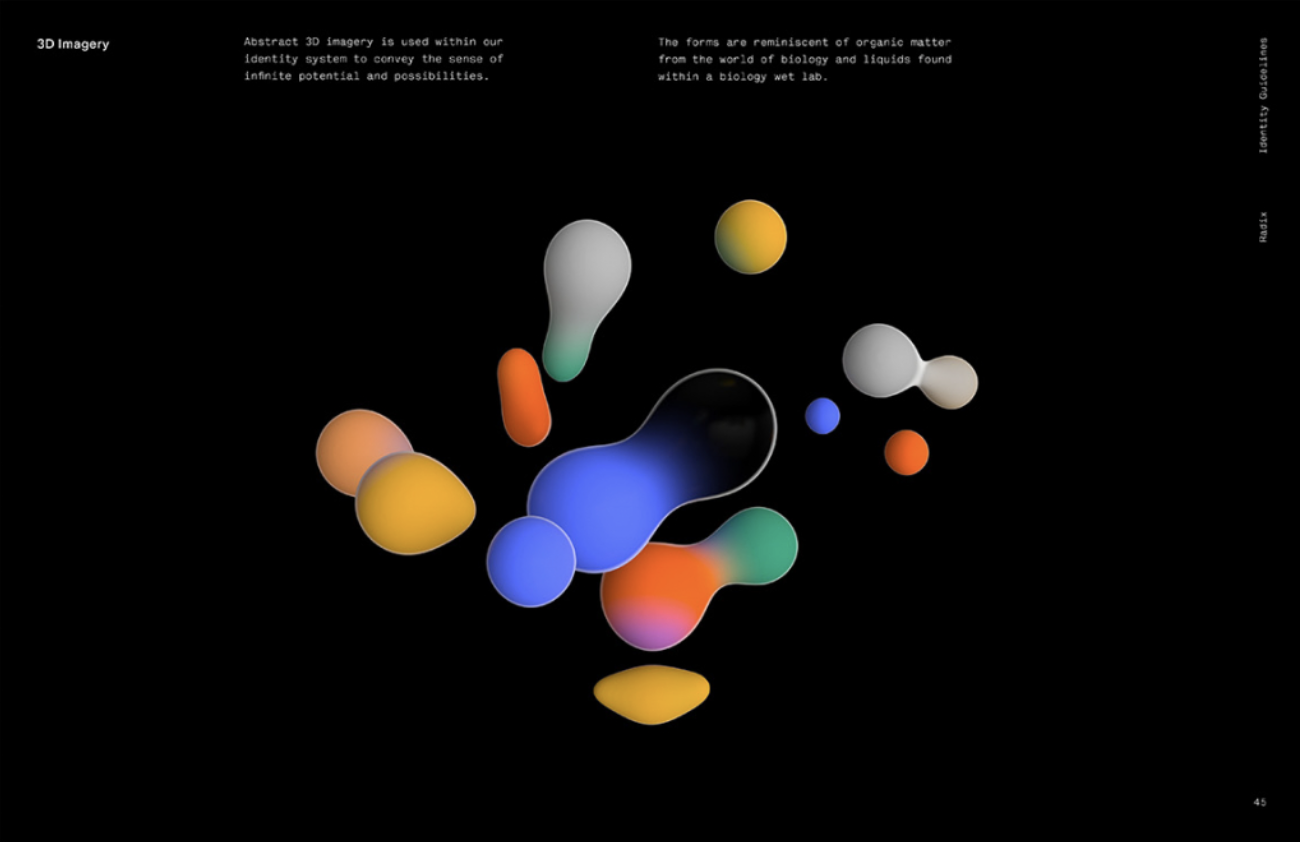
  • Radix: Immediately, the muted tones and black background catch your eye from the jewel or cool tones and white background of other tech brands. Throughout the assets, the morphing droplet graphics tie together to create a strong voice that screams “science.”

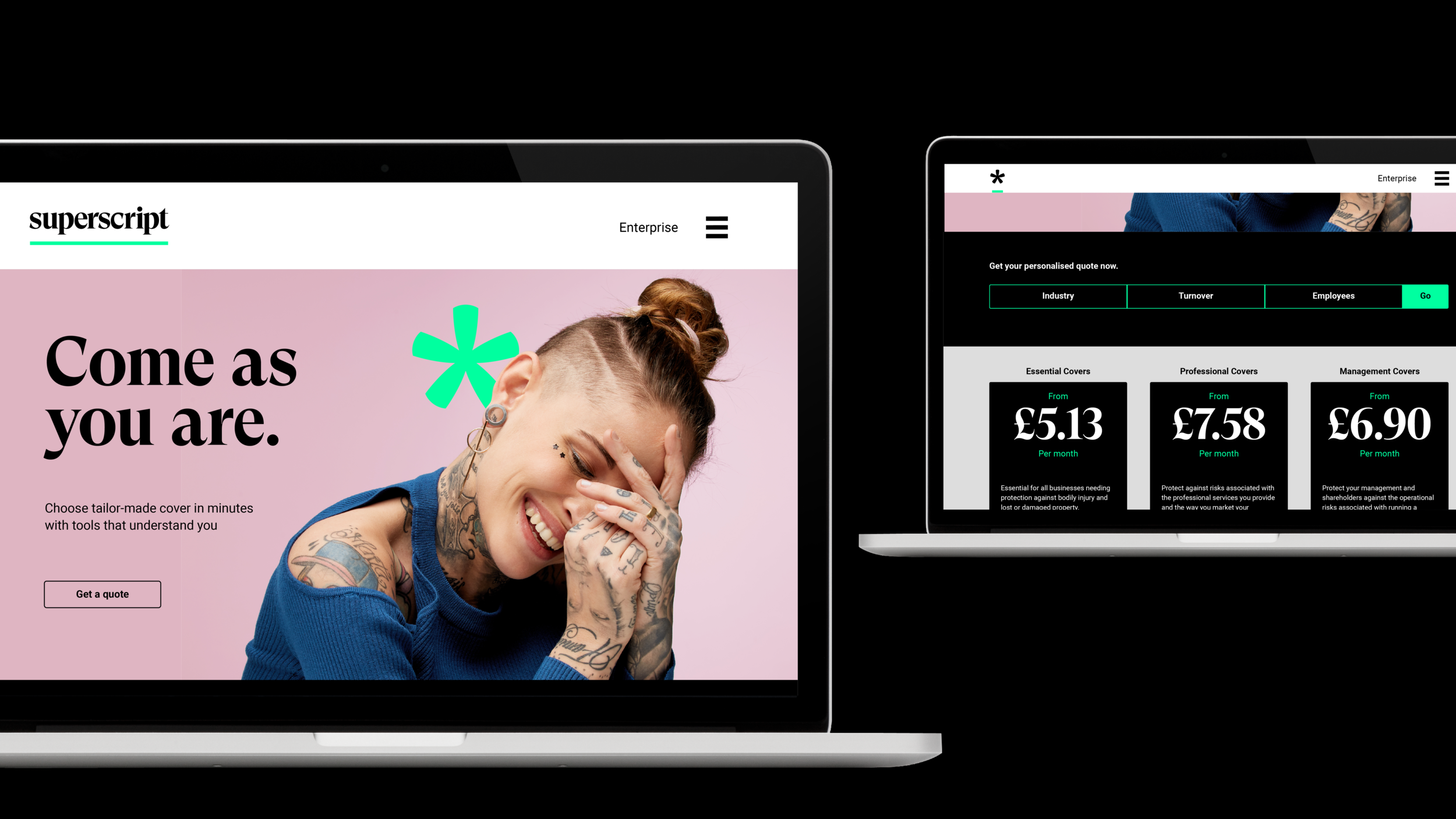
  • Superscript: The serif typeface used so effectively is just one component of why Superscript is effective. Superscript is undeniably eye-catching with a flexible design system.

What Doesn’t Work

Effective branding also means avoiding the makings of a poorly thought out visual system. Here are some common branding mistakes that you should avoid:

  • Generic stock images of devices

  • Bland, blue-tinted color palettes

  • Overuse of gradients

  • Simple geometric logos, lacking care and finesse

  • Unremarkable sans serif typography

  • Buzz words like “disruptive” or “unicorn”

  • “Dorky” avatars

  • Generic logos from 99designs (the ultimate sin, outweighing all others on the list!)

Of course, there are some exceptions to the rule. Overused elements like the color blue and geometric logos can be executed thoughtfully. Reclaiming the geometric logo by adding some personal touches, or using the color blue strategically can breathe new life into tired patterns.

The Bottom Line

Branding is vital to the success of a tech company. Settle for good enough, and you’ll risk blending into a plethora of tech companies doing the same. Vying for consumer confidence will be much harder if they feel like you haven’t put enough care into creating a sincere and consistent brand. But starting with thoughtful branding that is trustworthy and consistent should put you on the path to a loyal consumer base.


Anastasia Salazar Ltd. is an independent design studio for tailored branding and digital designs. Reach out to learn how we can help you fuel growth and maximize your brand’s impact.
Brand Taglines: What They Are & How to Come Up With Them by Anastasia Salazar

Without even mentioning the names, I’m guessing you know which companies these phrases are associated with:

  • Just do it

  • I’m lovin’ it

  • Taste the rainbow

Such is the power of brand taglines: the short, punchy slogans that capture the essence of a brand.

Brand taglines are more than just catchy sayings, though — they’re an important element of your overall brand identity. A good tagline quickly and efficiently sums up who your company is and what it’s all about. Taglines also fill an important gap that other parts of your brand, like your logo and company name, don't. They help solidify your brand personality and communicate your values, which rarely comes through in your name or design alone. Truly great taglines can even elevate your company to a memorable household name.

While I can’t promise coming up with a tagline will launch your business to stardom, I can assure you that it will only bolster your brand. In this article, we’ll discuss the traits of a great tagline, go over some examples, and share some tips for coming up with a tagline of your own — read on below.

What Makes a Tagline Work?

There’s no one single way to define a good tagline, but to me, the best brand taglines:

  • Clarify what a brand does

  • Differentiate the brand (in terms of purpose, values, emotional response, etc.)

  • Are clever and memorable

A tagline that checks all three of these boxes is top-tier as far as I’m concerned, but even if it’s not a perfect trifecta, it can still be good. I’d recommend aiming for at least two out of the three criteria above.

Taglines should also be:

  • Easily pronounceable and spellable: If your tagline is too much of a tongue-twister, it’ll be harder to stick in the minds of your target audience. If it’s not easily spellable, it makes typos more likely.

  • Concise: Taglines are, by definition, short — a longer phrase is more like a brand story or vision.

  • Distinctive: Your tagline shouldn’t sound generic, or too much like another brand’s tagline.  

  • Communicating your message: Taglines should provide a glimpse into the heart of who you are, what you value, and what you have to offer.

  • Pleasant to say/hear: A tagline that rolls off the tongue is much more memorable than one that sounds clunky.

  • Something you can stand behind: Your tagline should come off as a natural extension of your brand, not just a clever saying. 

The safest taglines are usually more direct in describing what a company does. Concrete taglines like this are often particularly good for brands that are just starting out, or ones without much name recognition. If you do choose to go in a more conceptual direction, make sure that other parts of your brand — like your logo or the imagery on your website — clarify what you do. 

A punny or pithy tagline can be a little bit riskier, but it can also be more memorable. It’s usually best suited for brands that are playful enough to back it up — if the only place you express humor is in your tagline, it can come off as off-kilter or even inauthentic.

Tagline Examples

Before you start brainstorming your own brand taglines, it’s always good to check out examples from other brands. Take a look at the following examples and note what you like, what you dislike, and what you think may work well for your brand.

Brand Taglines I Love

dsc_channel_art_template.jpeg
  • Shave time, shave money - Dollar Shave Club: Such a clever way for Dollar Shave Club to explain their unique proposition value — perfect for their playful brand.

  • Melts in your mouth, not in your hands - M&M’s: This tagline’s actually been in use for more than six decades, having first been coined in 1954. The words have a rhythmic, almost melodious feel, which gives it major staying power.

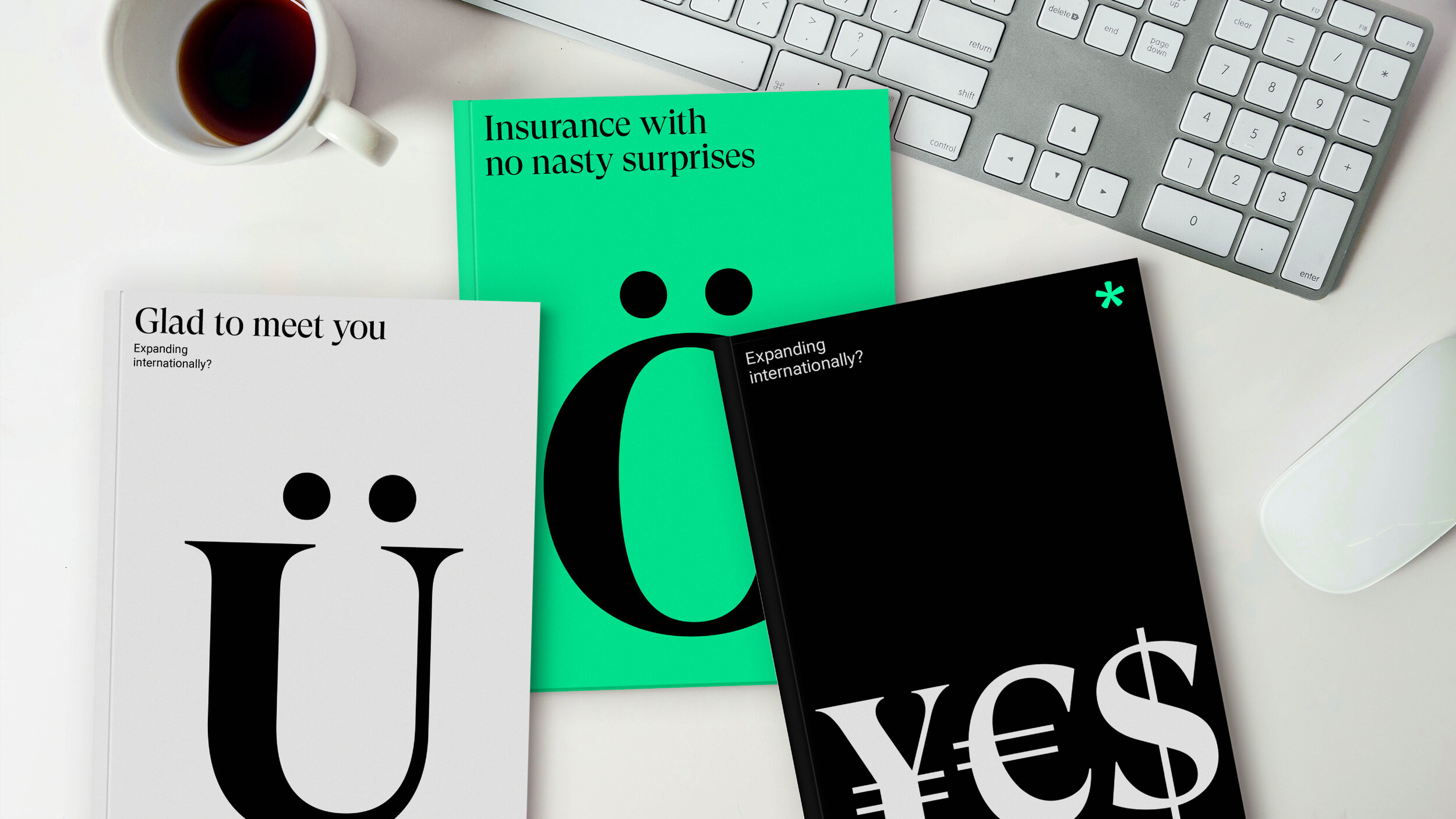
  • Say ‘yes’ to the world - Lufthansa: This tagline does such a great job of evoking adventure and awe — it makes you want to drop everything you’re doing and go book a trip.

  • The world's most comfortable shoes - Allbirds: It’s a bold claim, but it works well since they have such an excellent product to back it up.

  • Think different - Apple: One of the most inspirational taglines I can think of — it makes Apple feel like more of a way of life than a tech hardware company.

  • America runs on Dunkin' - Dunkin’ Donuts: This tagline does a great job of elevating the brand. It suggests that Dunkin’ Donuts isn’t just a place to grab a snack when you’re hungry, it’s a way to power your day. And it’s pretty daring of them to associate their brand with America as a whole, but it makes sense — donuts are an iconic American food.

  • Telehealth for a healthy, handsome you - hims: It’s amazing how elegantly these six words explain what the company does, and the “h” alliteration gives it such a nice touch.

Brand Taglines That Missed the Mark

These taglines are forgettable at best, and laughable at worst. Look to them as an example of what not to do.

  • Good luck - Uzbekistan Airways: This tagline definitely doesn't inspire confidence, to say the least — when you’re flying, you don’t want to feel like you’re taking a risk.

  • It’s not for women - Dr. Pepper: This one is just downright offensive. It’s shocking that a tagline this blatantly sexist debuted in 2011 — luckily, it didn’t last long.

  • Drive one - Ford: This tagline, retired in 2012, isn’t terrible necessarily — it’s just so forgettable. While I’m sure the team that came up with it worked hard, it feels lazy.

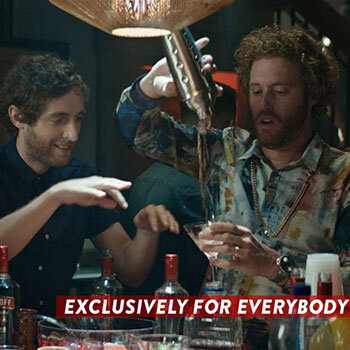
  • Exclusively for everybody - Smirnoff: Talk about mixed messages. In trying to appeal to both an elite audience and an average one, this 2014 tagline failed to resonate with either.

How to Create Your Own Tagline

Great brand taglines might seem like they’re pulled out of thin air, but there’s usually a well-thought-out process behind them. To start generating your own ideas, create a word map containing words and phrases that are relevant to your business. You can include tangible things related to your work — if you’re a fence company, for example, you might write down wood, picket, yard, etc. — as well as concepts. You may also want to add some words that imply mastery or excellence in your field. Looking at feedback from your employees and customers can help spur thoughts, too.

It’s especially important to keep your clientele in mind when crafting your tagline so that it resonates with your target audience. Ask yourself: what characteristics and qualities do your customers have? What wishes, no matter how far-fetched, do they voice? What have they responded well to so far? Dig into audience research for these insights, or speak with a few customers directly, then come up with some associated words and phrases.

While brainstorming for your word map, make sure you don’t judge or edit too much — those are two separate processes that don’t play well together. If you’re too selective about what to include in your initial word map, you might miss out on some great ideas down the road.

Once you have a robust word map, you can start playing around with the language. Think about how you might combine them or riff off of them using literary devices like alliteration, homophones (especially if you want something clever/punny), rhymes, rhythm, synonyms, and more. I also love using this idiom dictionary to get ideas for popular sayings to play off of.

After you’ve come up with a few strong contenders, check each phrase for copyright issues and test them out on your audience until you’ve identified a winner.

Applying Your Tagline

So you’ve come up with your tagline — now what do you do with it? The options are endless. You can put it on your homepage, packaging, print and digital ads, social media banners… anywhere that your brand appears. Wherever it goes, though, make sure the visual appearance is consistent with the spirit of your tagline (and, by extension, your overall brand). Choose a fitting typography for it — a hip, quirky tagline probably shouldn’t be in an old-fashioned serif font, for example. And think about what imagery you’re going to pair with your tagline as well. Again, you’ll want to go for consistency. If your brand is all about embracing yourself for who you are, you probably don’t want to cast a bunch of models that look like they could be strutting the catwalk in Paris. You should be able to look at any given asset with your tagline on it and feel confident that the design and copy work together as a whole.

When creating a brand identity, taglines are often an afterthought, with elements like logo and color palette taking top priority instead. And they aren’t strictly necessary — some companies don’t even use them. But you shouldn’t underestimate their power. The best brand taglines can help your audience understand who you are, what you do, and what you stand for — not to mention drive brand affinity and awareness.

The perfect tagline probably won’t fall into your lap, but if you do the necessary legwork, you’re bound to come up with something. And with enough research, creativity, and iteration, you might just find a tagline that can push your brand over the top.

Anastasia Salazar Ltd. is an independent design studio for tailored branding and digital designs. Reach out to learn how we can help you fuel growth and maximize your brand’s impact.
How to Choose Typography for Your Brand by Anastasia Salazar

ASL-Design-Blog-2021-Typography-for-branding_v1_Website.png

When people think of visual branding, the first things that come to mind are usually logos or colors. Typefaces, on the other hand, may come in at a distant third or lower. But even though they don’t always receive the same recognition that logos or colors do, typefaces play no less of an important role in branding — which is why it’s so important to learn how to choose typography for your brand.

Along with color and shapes, typefaces are one of the main building blocks of design. After all, nearly any application of your branding — your website, digital ads, packaging — will include copy. And if the typeface of that copy doesn’t complement the other elements of your visual brand identity, it can come off as amateur — like you haven’t put much thought into your design. Your audience may even struggle to get a feel for who you really are.

Choosing the right typeface isn’t just as simple as downloading the first free font you find, though — or at least it shouldn’t be. Below are a few things worth keeping in mind while you hunt for the perfect typeface.

First Things First

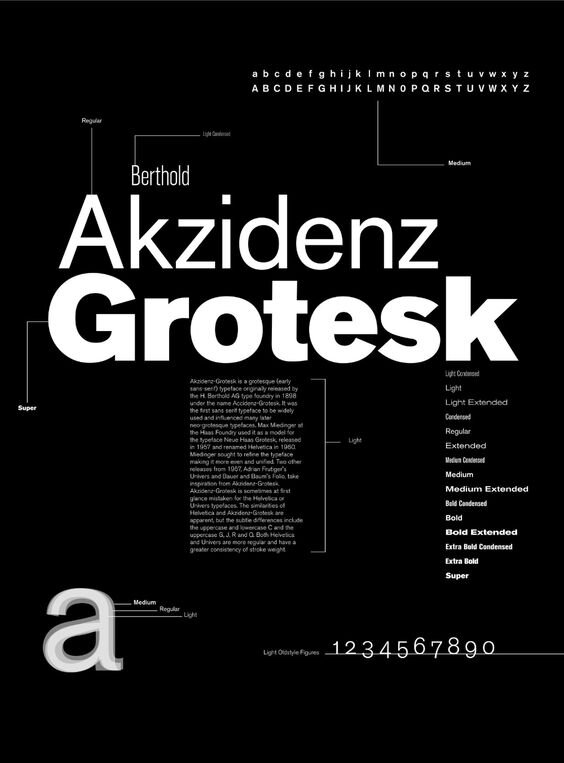
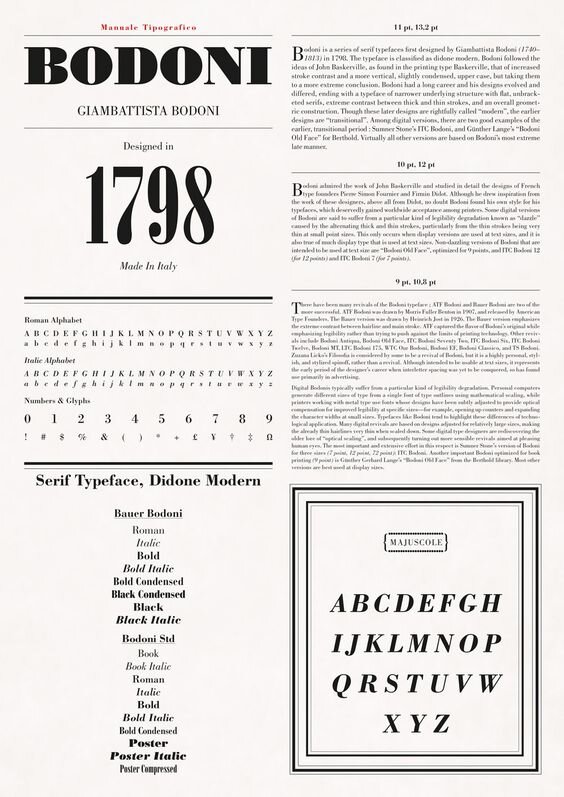
The key to selecting the right typeface is finding a match between the style of the lettering and the context in which it will be seen. Looking into a typeface’s history is a good place to start. A modern, high-performance athletic footwear company, for example, probably won’t want to use a typeface designed in the 17th century on their boxes. The connotation of the typeface is important as well — think about how traditional text in Times New Roman feels, or how juvenile Comic Sans looks. And don’t forget to consider the formal qualities of a typeface as well, like consistency and spacing. If you’re not a typography expert, this is where having a designer's help comes in handy!

Serif & Sans-Serif Typefaces

The two main categories that commercial typefaces fall into are serif and sans-serif. Serif typefaces are marked by small flourishes at the end of their strokes, while sans-serif typefaces don’t have them. Times New Roman is one of the most well-known serif typefaces, while Helvetica is a common sans-serif typeface.

Generally, serifs have more details and decorative embellishments, which can make them difficult to read at smaller sizes — so they’re usually not the best fit for body copy. You’re better off choosing a sans-serif typeface for that, and saving serif typefaces for larger text.

How Many Typefaces Should a Brand Have?

If you’re wondering how to choose typography for your brand, you might not be sure about how many different typefaces you’ll need. As a general rule, most brands choose two typefaces — one for titles and headers, and one for body copy. If you go this route, try to choose two that contrast one another so it’s easy to a) distinguish between them and b) understand the distinct roles they play. Choose two typefaces that are too similar, on the other hand, and they’ll clash and lose their purpose.

It’s possible to use only one typeface, though, as long as it’s flexible enough to be used in different applications. Try choosing a font with a few different weights to add a little more variety.

I rarely see brands with more than two typefaces. When you have a lot of different people touching your brand, it’s best to keep it simple to avoid confusion. I think you’d need a deep familiarity with typefaces and design to pull it off, but if you can, more power to you!

Where to Download Fonts

When thinking about how to choose typography for your brand, you'll almost certainly have to consider digital applications — there’s hardly a company out there anymore that doesn’t have some kind of internet presence. Then, you’ll have to decide whether you want to choose a cheaper (and sometimes even free) publicly-available font, or a bespoke one.

It wasn’t so long ago that people only used a handful of web fonts — remember when you would see Papyrus and Comic Sans everywhere? The past 10 years or so, though, have been somewhat of a typeface renaissance. Now, you can find a lot of high-quality fonts from Google and Adobe. But if you can afford it, I always prefer going with a custom-made font from a type foundry.

Custom-made fonts are so much more ownable, whereas if you use a publicly-available font, you run the risk of blending in with the hundreds or thousands of other businesses that have chosen the same one. Good type foundries put so much knowledge and detail into their work, which really allows you to stand out from the crowd.

5 Awesome Type Foundries Worth Checking Out

There are a lot of great type foundries out there, but a few of my favorites are:

1. Monkey Type

Design-blog-typography-1

Monkey Type is a cool, quirky type foundry with a strong portfolio of custom sans-serif fonts. I’m particularly fond of Banana Grotesk, a really flexible typeface that I could totally see being used for decades to come. Its minimalist style gives it a timeless look, and its readability makes it work well for either header or body copy.

2. Dinamo

Design-blog-typography-2

Dinamo is a Swiss type foundry that’s innovative in just about every sense of the word. They have a super fun, off-the-wall website, a really interesting licensing model, and of course, tons of cool typefaces. My favorite of theirs is Whyte — it has the most delicious cuts and a wide array of weights for all sorts of different use cases.

3. Acute Studio

Design-blog-typography-3

Acute Studio is a Netherlands-based type foundry founded by Diana Ovezea. I love how refined her typefaces feel — one of my favorites is Silverknife, a funky-but-elegant take on Copperplate Gothic. 

4. Sharp Type

Design-blog-typography-4

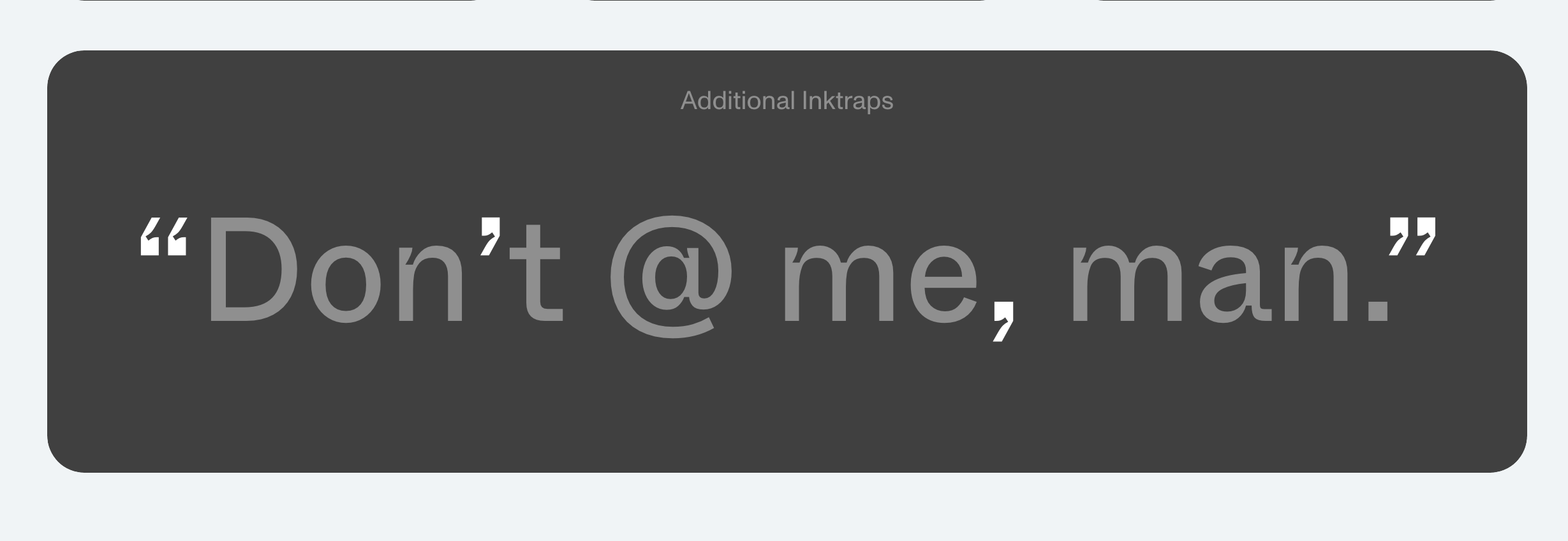
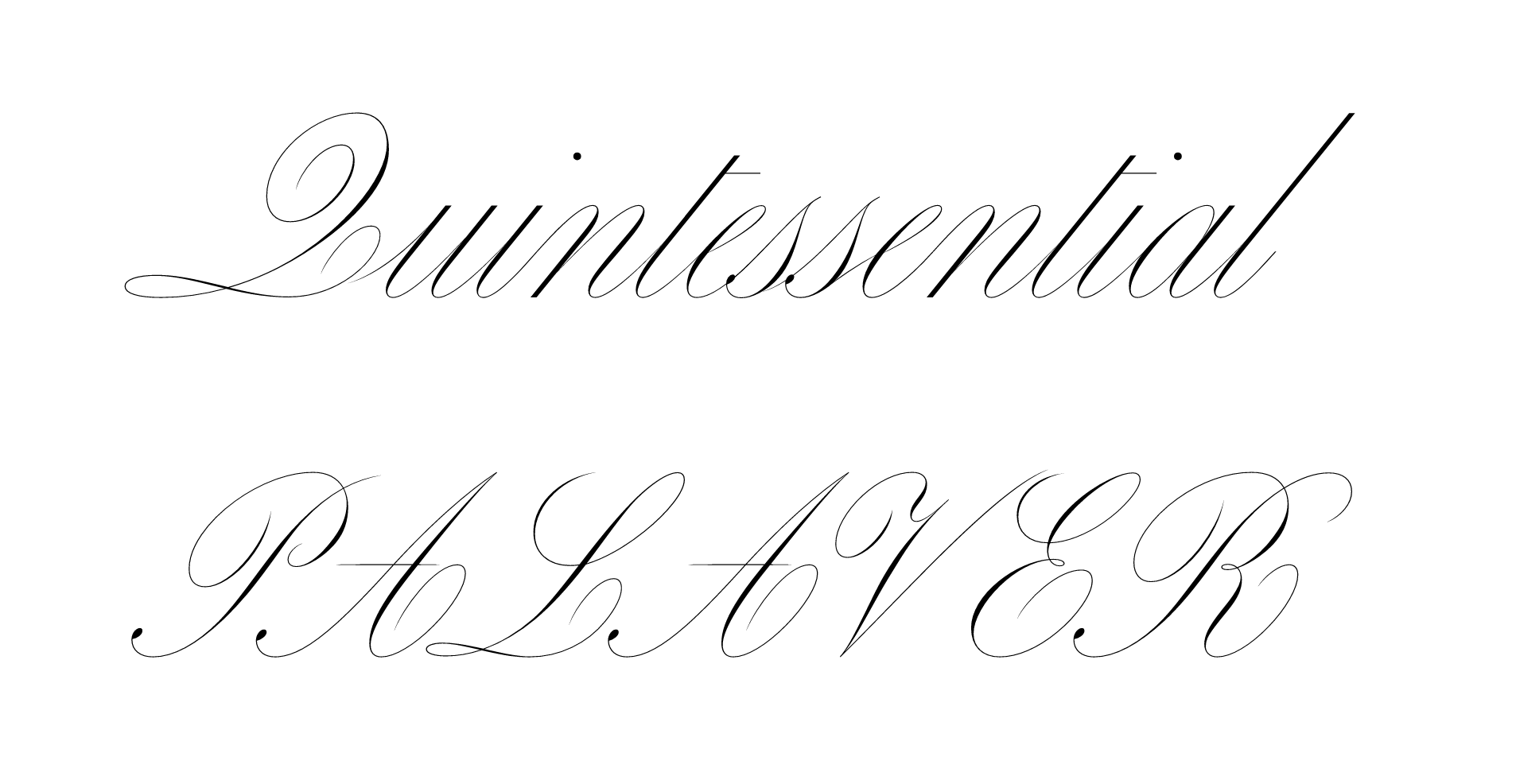
Sharp Type is a critically-acclaimed studio founded by Chantra Malee and Lucas Sharp. There's so much variety in their typefaces that it's hard to pick just one stand-out, but Carta Nueva is pretty dreamy — it’s almost enough to make me want to get it as a tattoo! There’s a great backstory behind it, too. The designer, My-Lan Thuong, shared that it’s “a digital re-imagination of a pointed-nib calligraphy model from 1851 in Barcelona, Spain” found at an antique fair in Madrid. How cool is that?

5. Jung-Lee Type Foundry

Design-blog-typography-5

You can tell that this Amsterdam-based foundry is one-of-a-kind from the minute you see their website. It has this surreal, retro, anti-design vibe that’s bizarre in the best way. You can even play around with the color, size, and weight of different typefaces with the type simulator on their homepage — I’m partial to Orbis, especially the italic weight with the beautiful ascenders.

Type foundries can be pretty male-dominated, so I love finding and supporting amazing women-owned studios. I’ve found a few different ones on Femmetype, an organization that celebrates women in type, and @womenintypography, an Instagram account that features womxn in type design.

Although they may not get the credit they deserve, typefaces are undoubtedly the dark horse of brand design. The right one can pull your entire brand identity together, while the wrong one can stick out like a sore thumb. And although it may still take some time before you find the perfect fit, you’re in a great position right now — learning how to choose typography for your brand is often the hardest part.

Anastasia Salazar Ltd. is an independent design studio for tailored branding and digital designs. Reach out to learn how we can help you fuel growth and maximize your brand’s impact.
4 Environmentally Conscious Brands to Celebrate This Earth Day by Anastasia Salazar

ASL-Design-Blog-2021-enviornmentally-conscious-brands_v1_Website.png

Even in the wake of a pandemic that has shaken the economy, sustainability is still at the top of consumers’ minds — a global survey from BCG found that 70% of respondents are more aware of the threat climate change poses now than before the pandemic, and 40% of respondents plan to integrate more sustainable behaviors in the future. On top of that, some studies have shown that sustainable companies are actually more profitable. Going green can be a big competitive advantage, and an increasing number of environmentally conscious brands are embracing it to the fullest.

But there are a lot of cliché, tired tropes when it comes to brand design for eco-friendly companies (think: green color palette, recycling symbols everywhere, brown paper packaging). That’s not to say you shouldn’t use any of those things, but if you use all or most without adding a twist, you can’t expect your brand to stand out. Do your eco-friendly branding well, on the other hand, and you can drive affinity for your company and benefit the planet, its people, and your profits.

Below are a few companies that are doing a particularly good job of highlighting their eco-friendly bona fides in a unique, creative, and appealing way — check them out to find some inspiration for your own brand.

Environmentally Conscious Brands to Watch

1. Prose

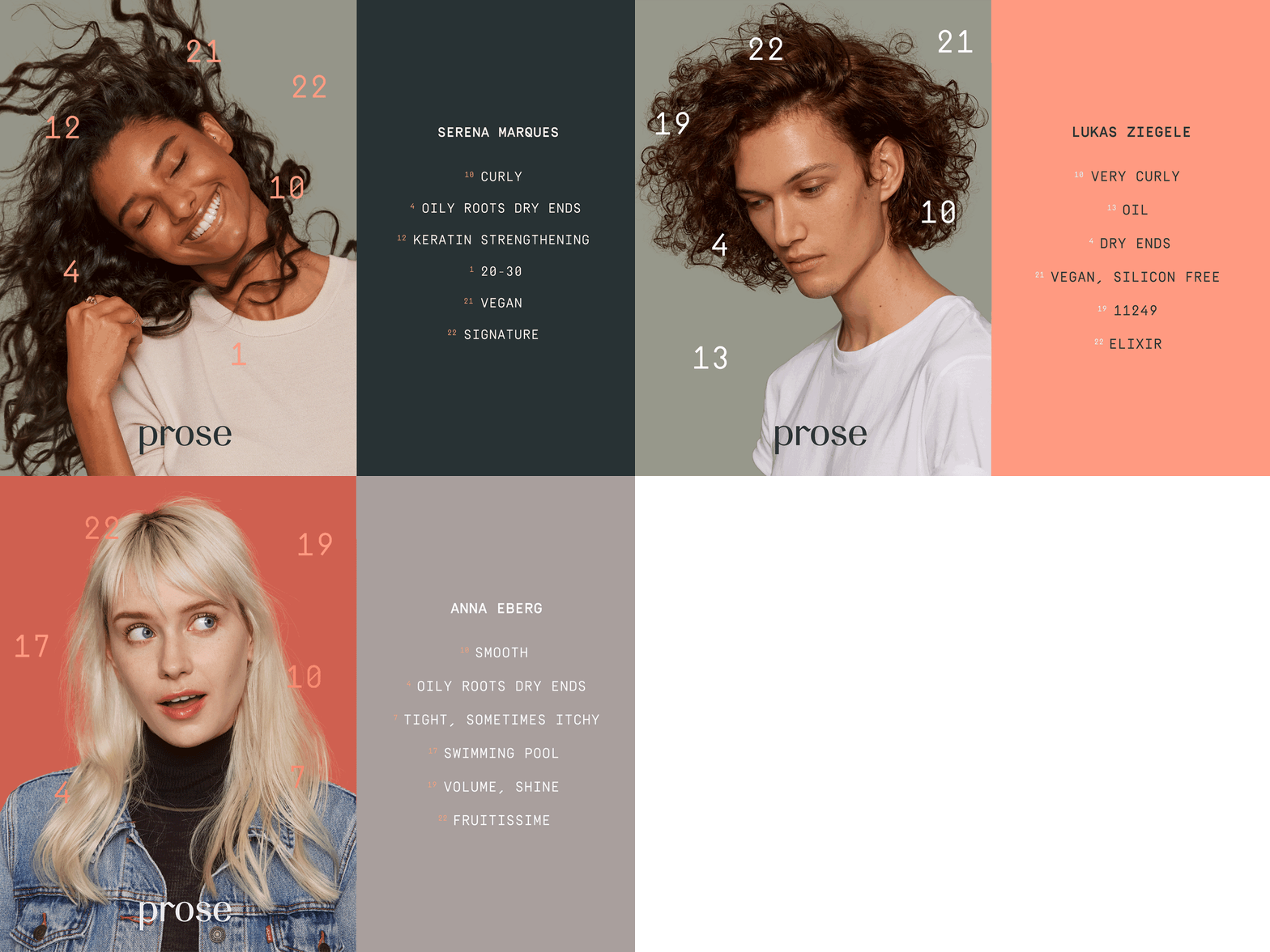
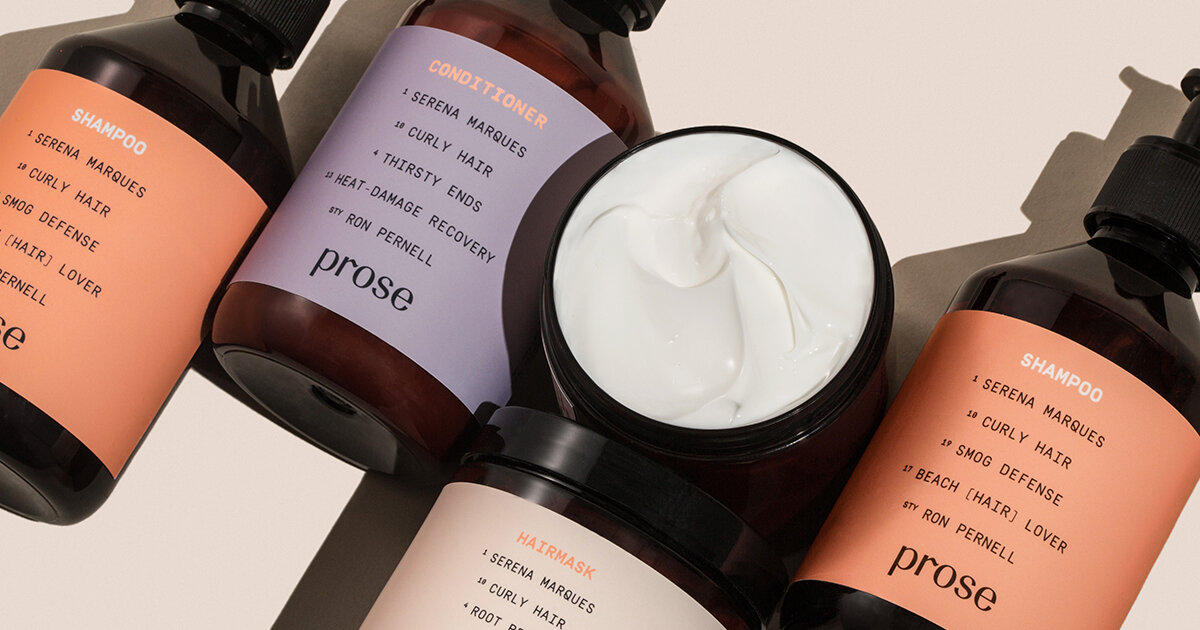
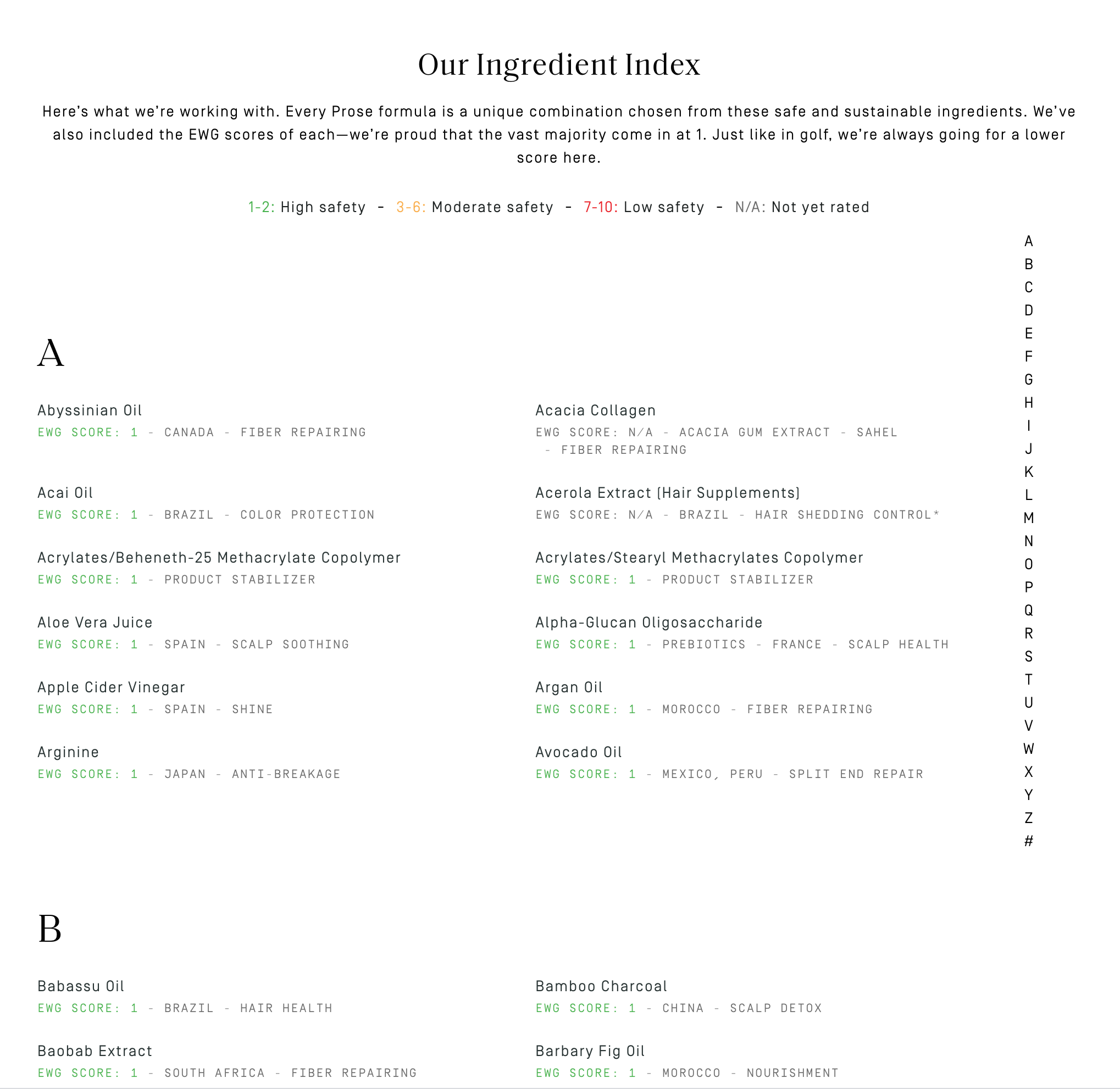
Prose, a Brooklyn-based company that offers personalized hair care, has an apothecary-like look that really stands out in their space. Their academic font and ingredient index feels intellectual and scientific, but not overwhelmingly so. They manage to balance their textbook vibe with a touch of warmth from their color palette and authentic portraits. The packaging looks almost like a prescription, but it’s still eye-catching enough to make you want to buy their products. They also do a great job of highlighting their environmental efforts without it being heavy-handed — as you scroll throughout the site, you can see the B Corp logo and find details on their earth-friendly ingredients and packaging.


2. Mutha

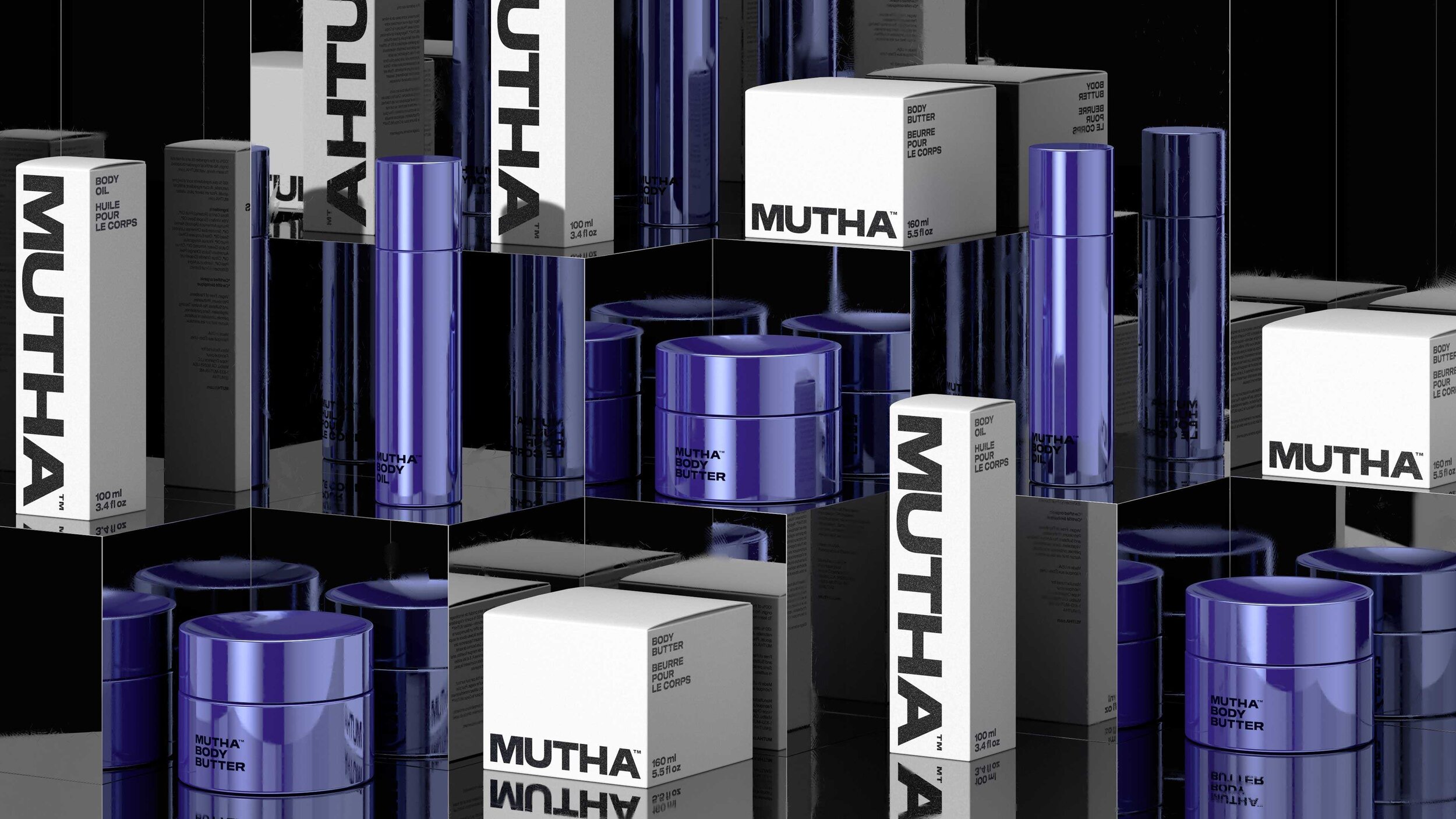
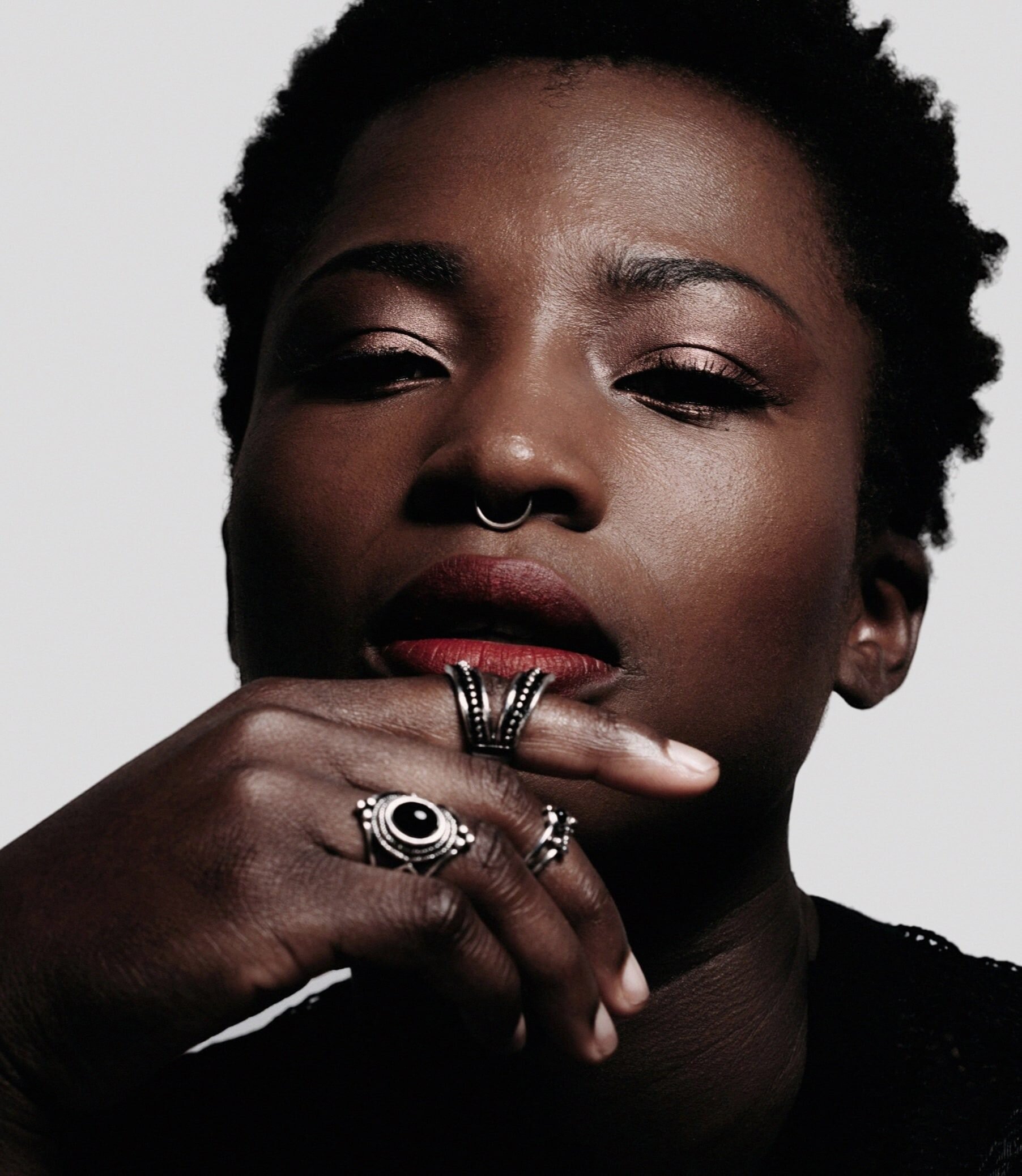
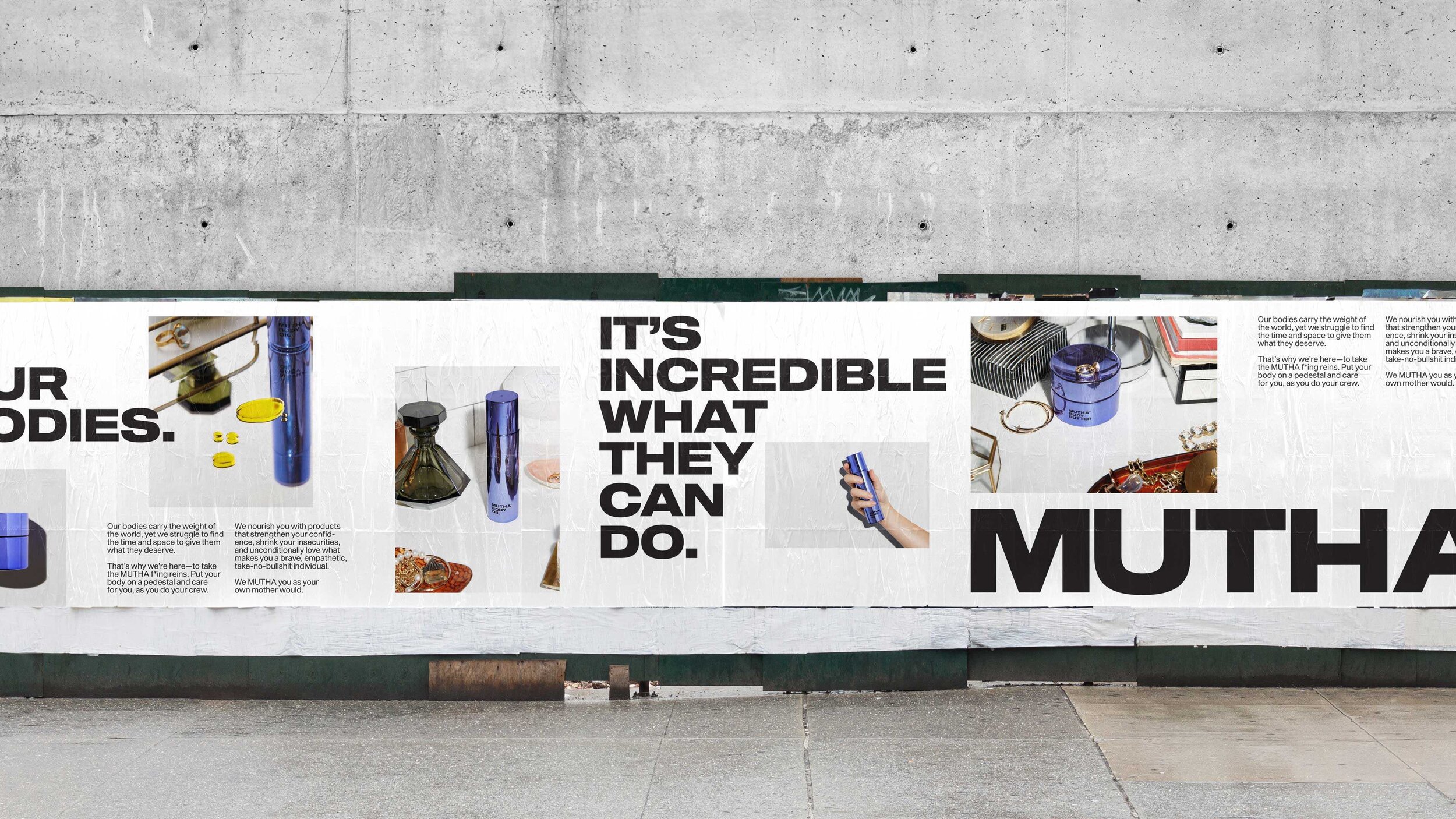
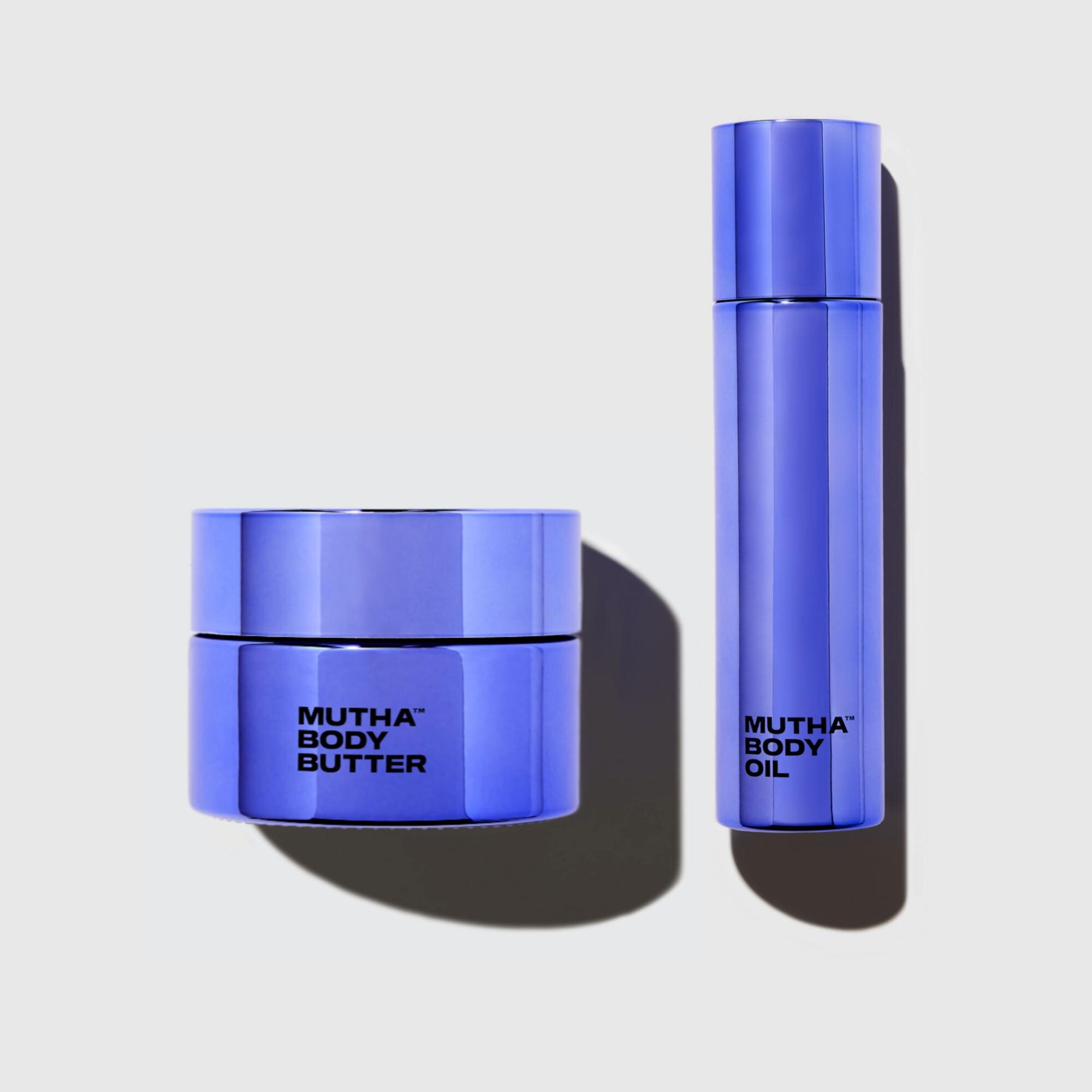
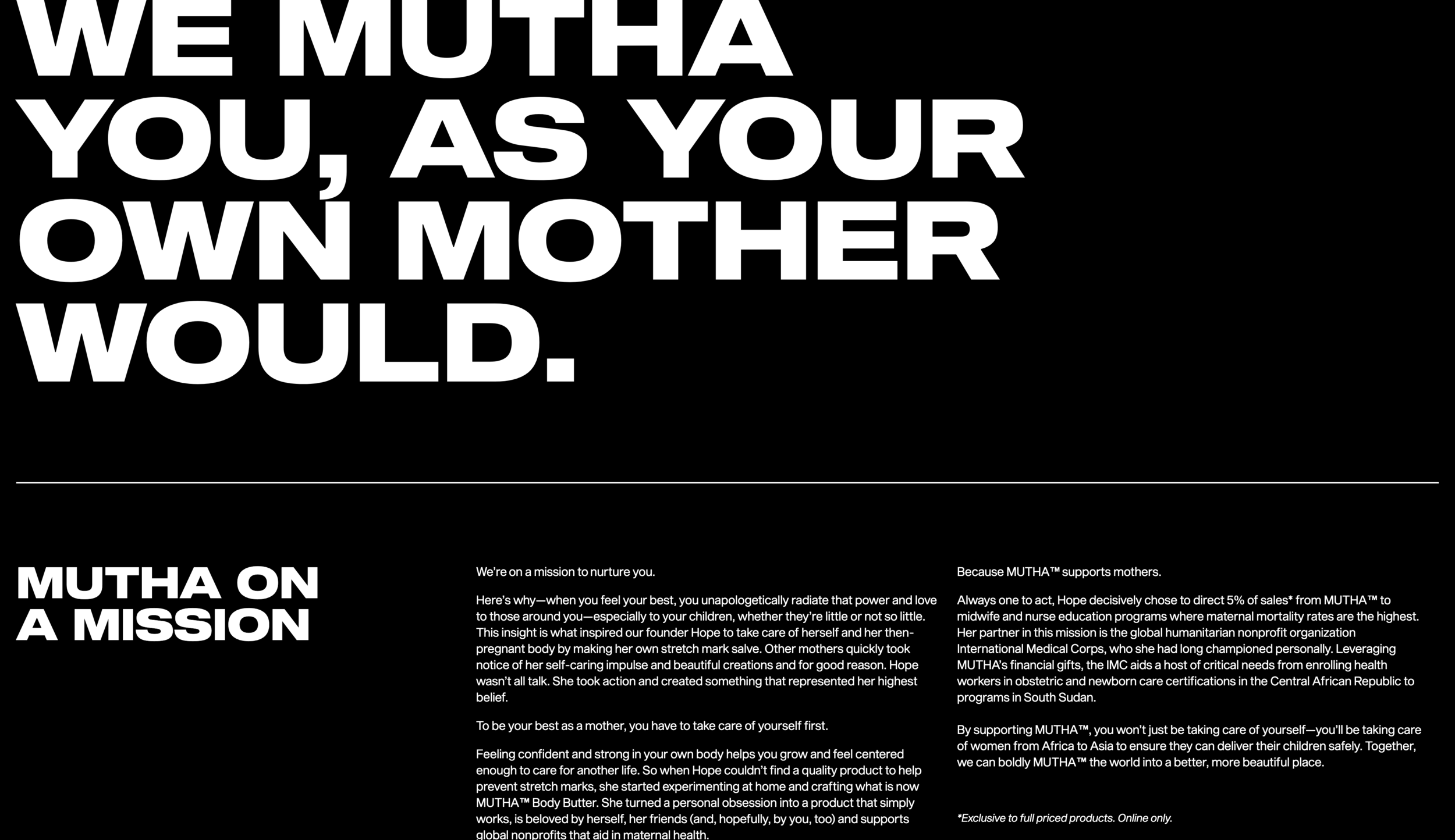
Skincare product company Mutha takes a much different approach, with a look that’s bold and brash. Their all-caps font, contrast-heavy photography, and metallic purple packaging make their branding hard to ignore — and it’s definitely not the kind you typically see with clean beauty products. In fact, it’s pretty hard to spot their eco-friendly shoutouts at all. They mention that their products are clean a few times throughout the site, but it’s really only on their FAQ and ingredients pages that you get details on their natural, (mostly) vegan, and often organic ingredients. With so many similar companies going all-in on an earthy visual style, Mutha really challenges the idea of what environmentally conscious brands can look like.


3. Buffy

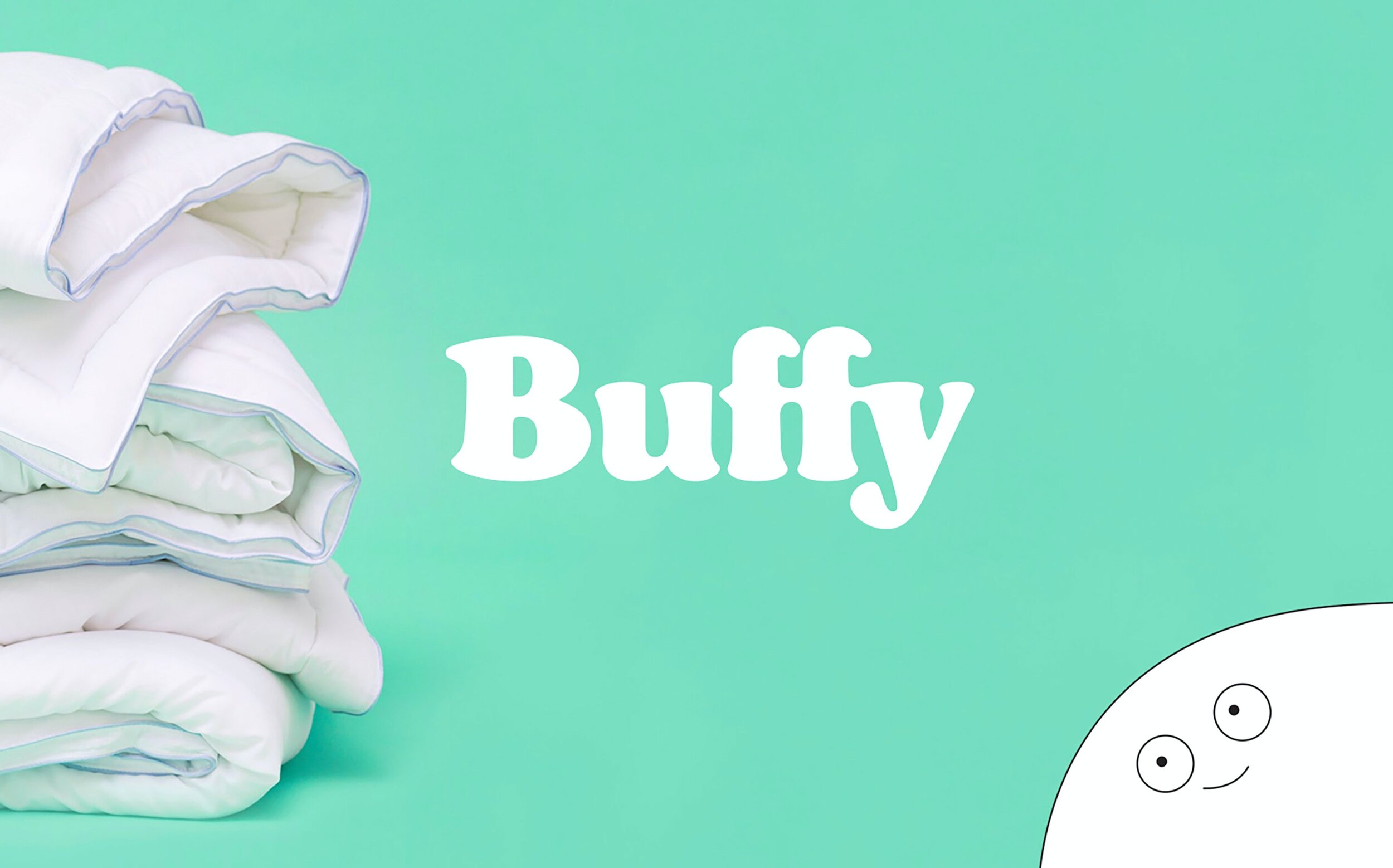
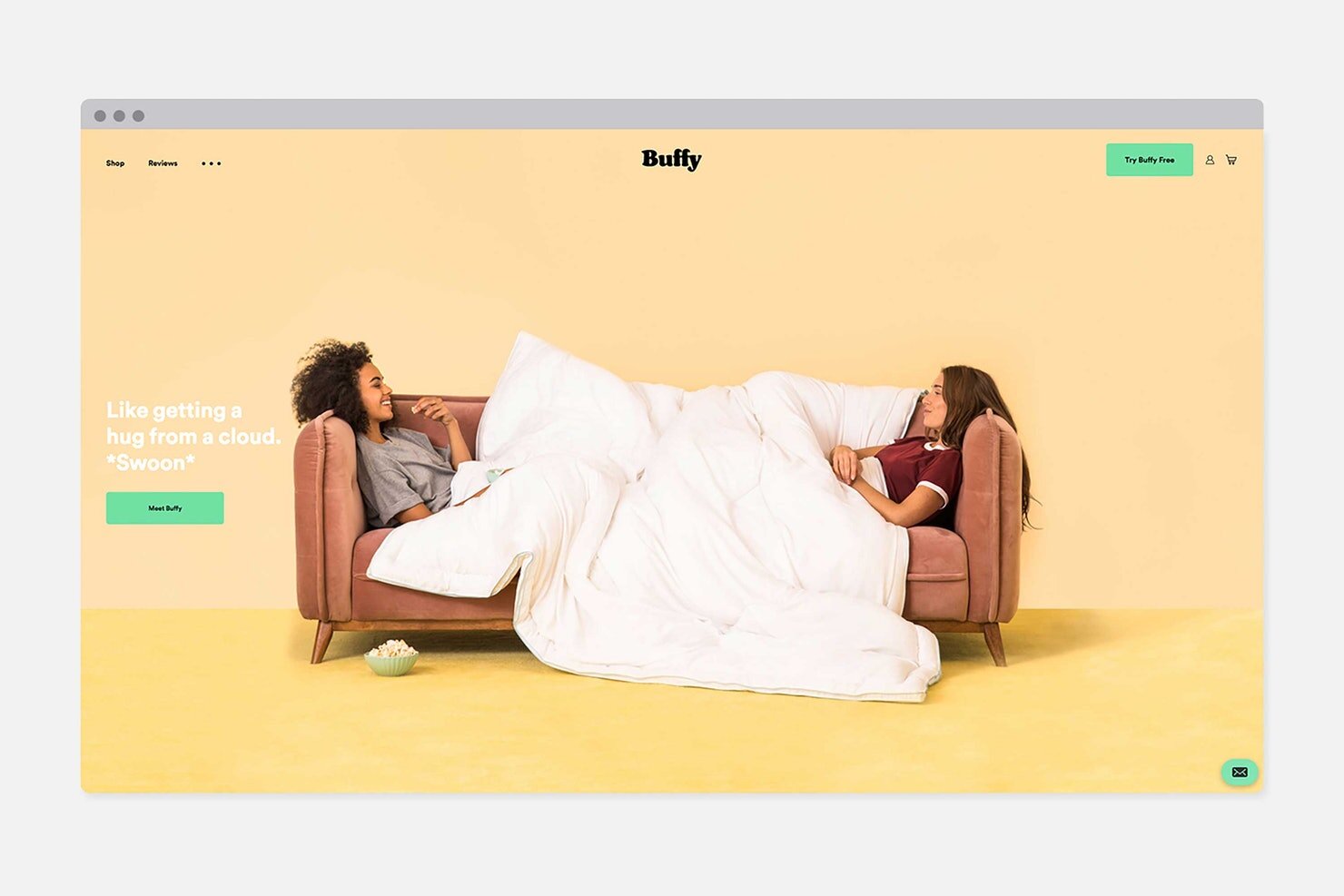
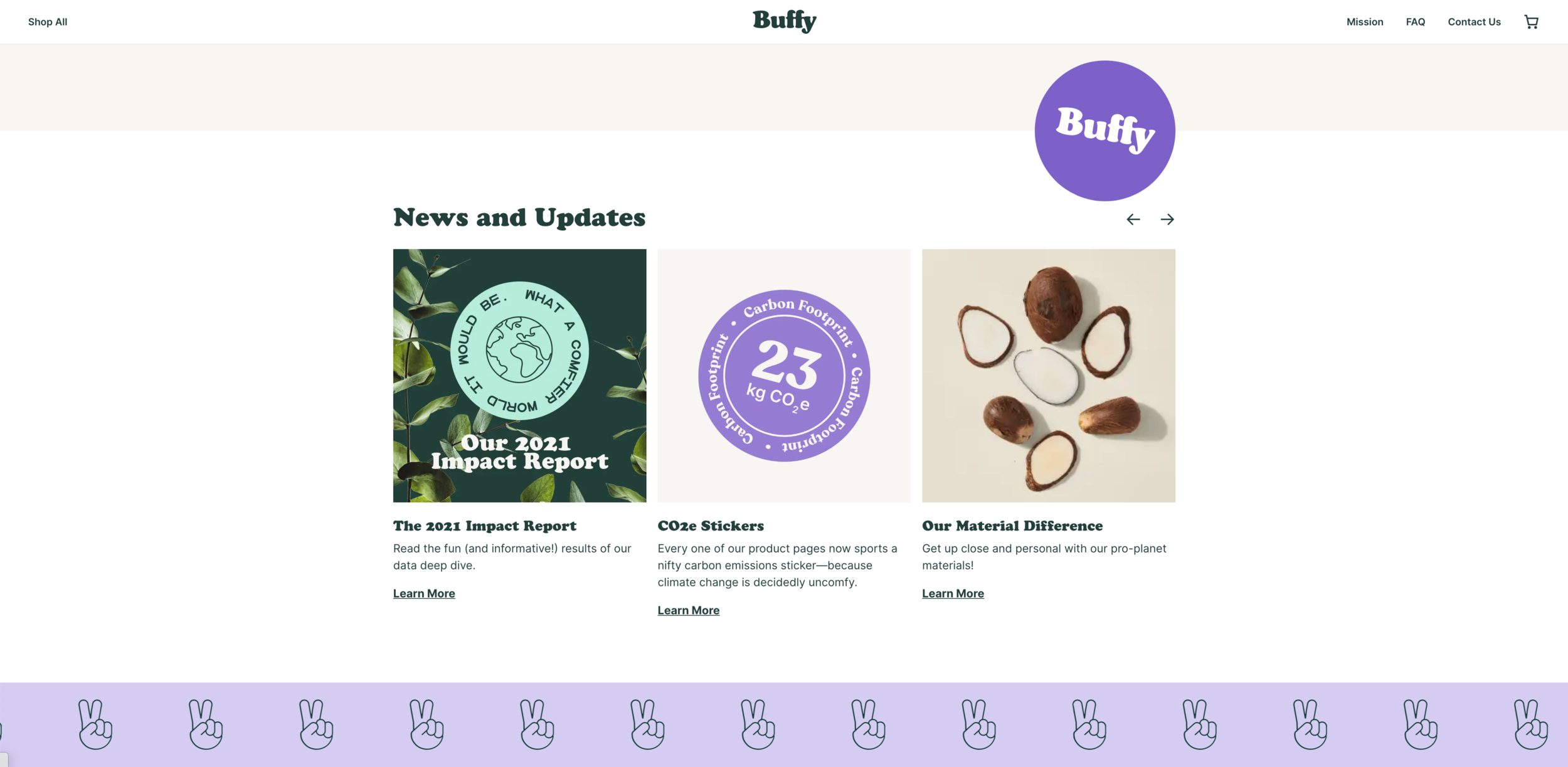
Buffy, a bedding company that uses sustainable materials, has a really cool retro feel to their brand. And you can see it the second you open their website, thanks to their prominent chunky 70s-inspired typeface. Their lettering is so big and fluffy it looks like you could sleep on it. They feature the natural materials they use prominently on their site, and share their sustainability practices on their mission page. There, Buffy highlights not only their responsible materials but also their carbon offset program, donated returns policy, and even a detailed timeline on how they’re working to close the loop in the next 10 years — proving that their eco-friendly branding is more than just talk.


4. Girlfriend Collective

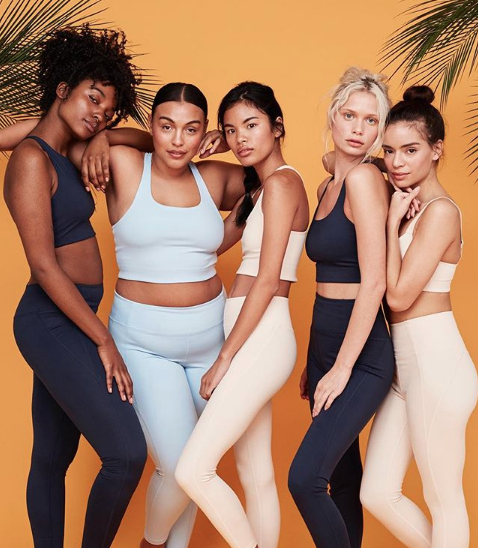
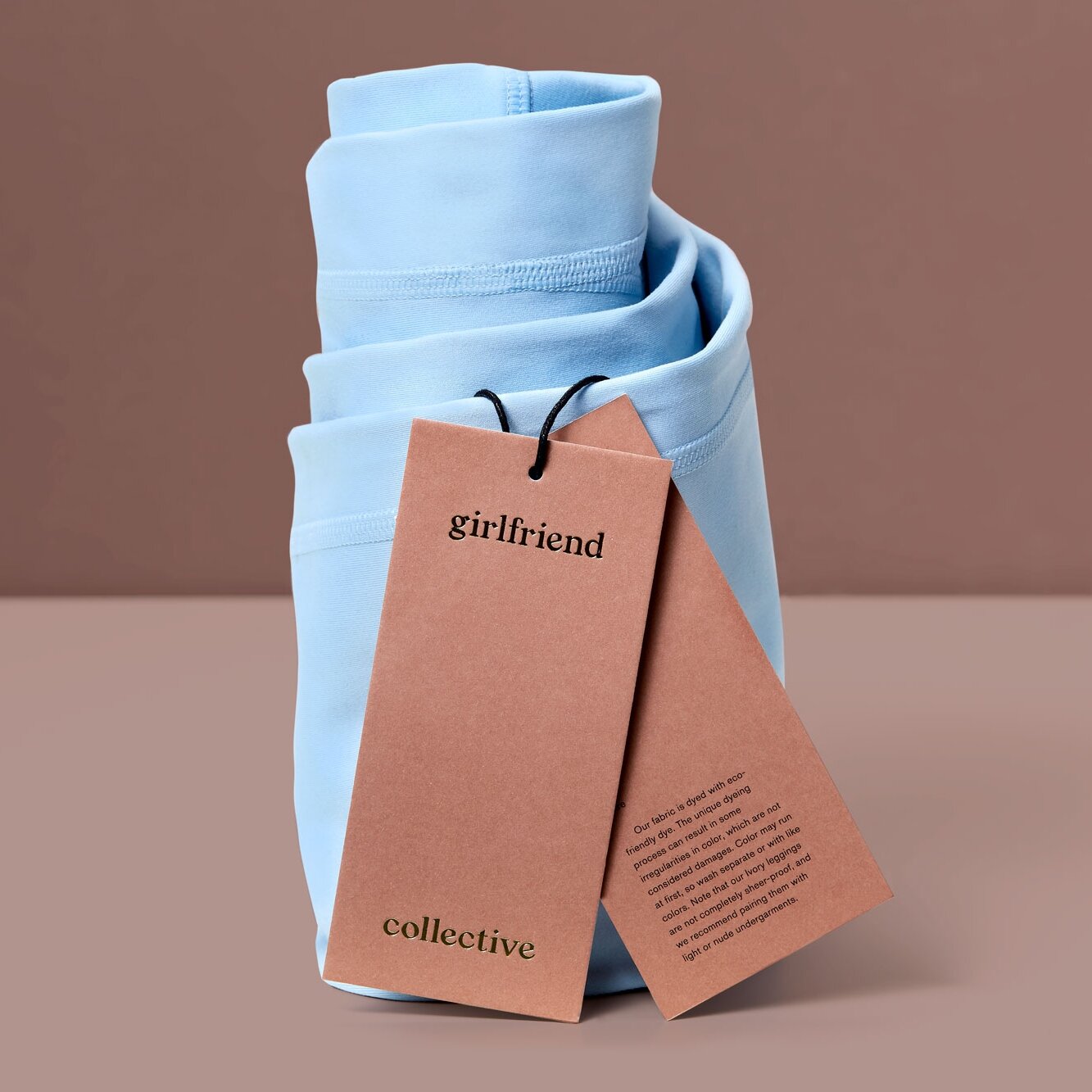
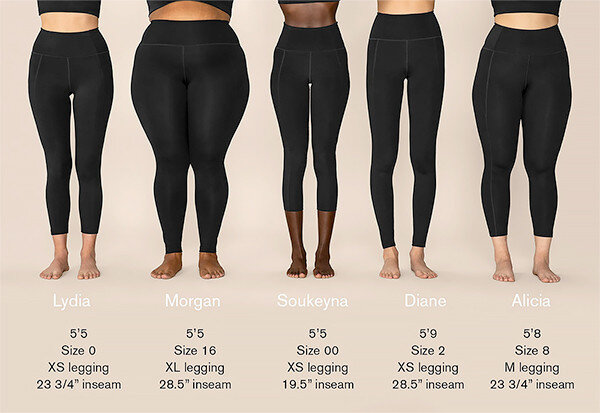
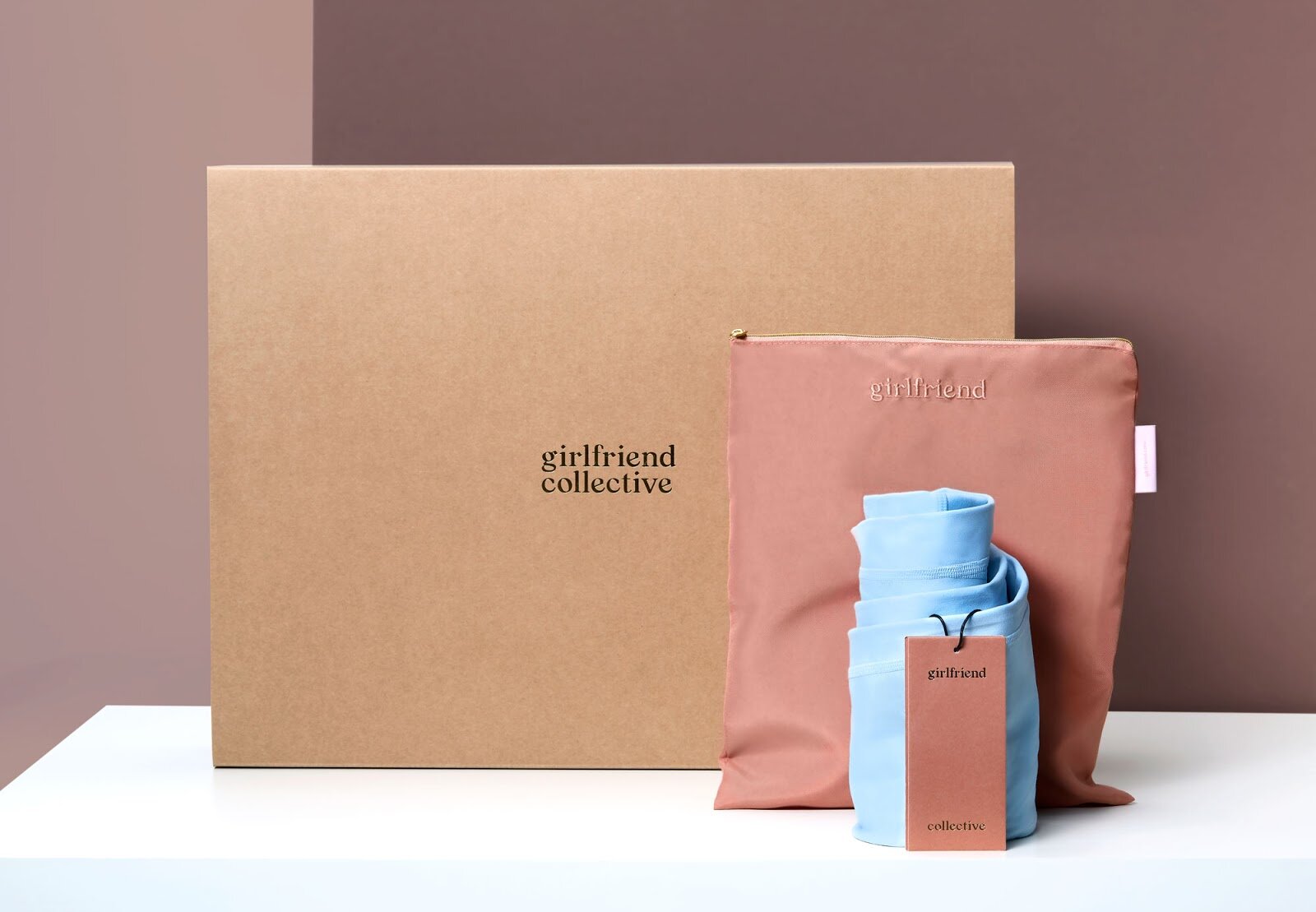
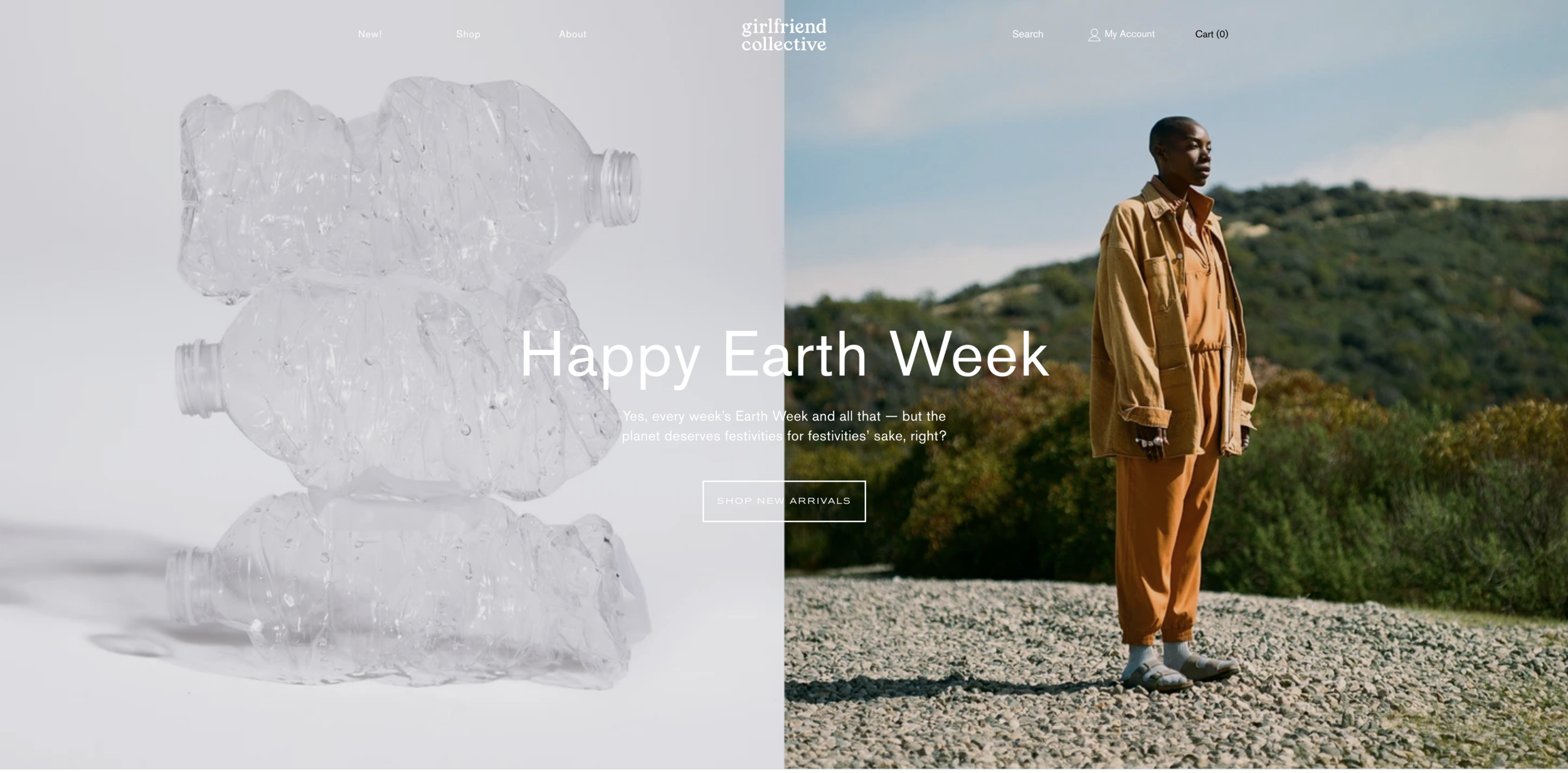
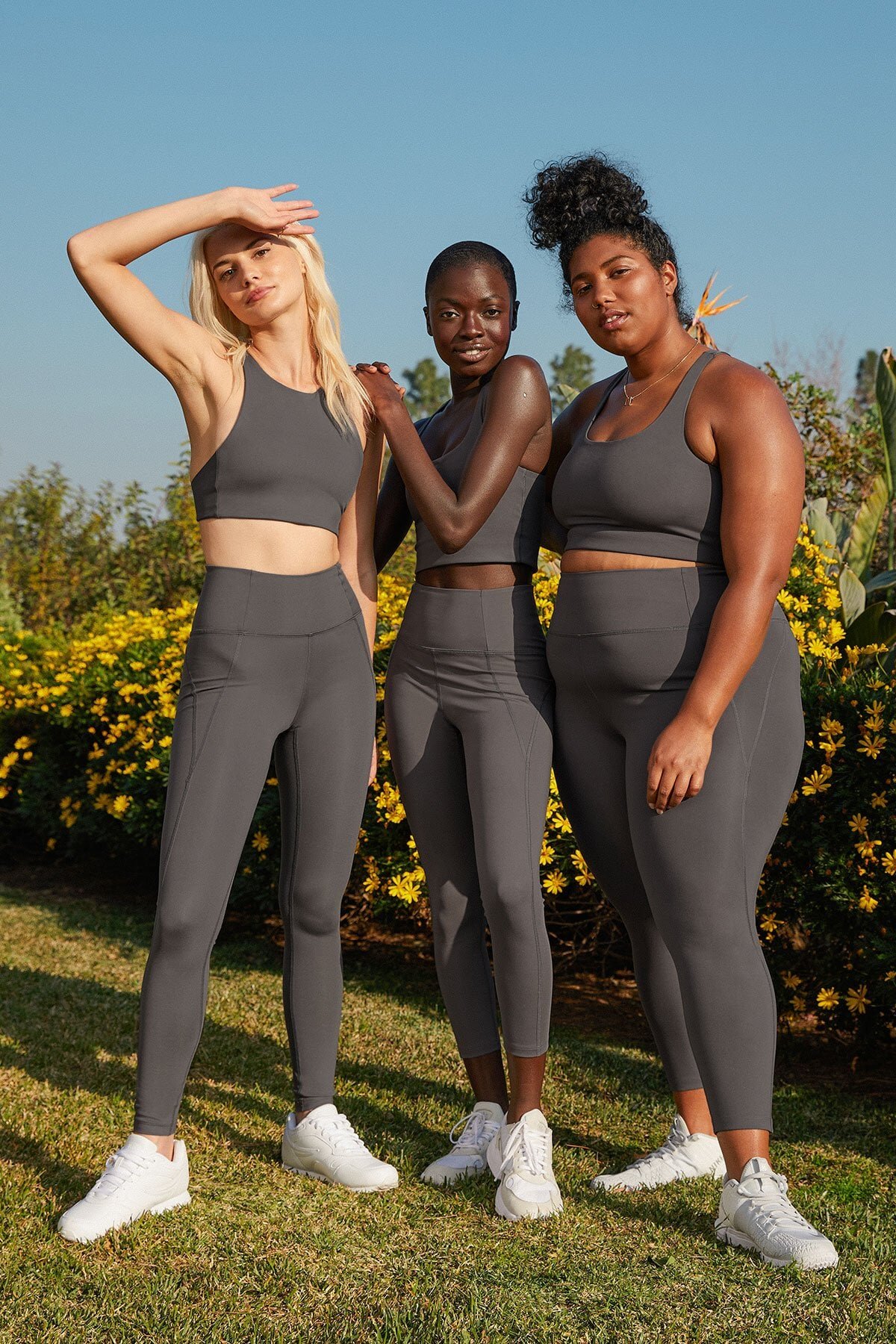
Girlfriend Collective first debuted with leggings made out of recycled plastic, but they have since started manufacturing clothing and accessories of all kinds: dresses, windbreakers, bras, scrunchies… they even make laundry bags and washing machine filters to catch microfibers from their recycled plastic before it ends up in the ocean. They have a super soothing neutral color palette, a big trend in the direct-to-consumer space, but they manage to make it their own by pairing it with a 70s-inspired serif typeface that has a bit of gothic flair. I love how much diversity they have in their models, too. You see bodies of every shape and size and disabled folks as well — one of their models was a Special Olympics gymnast with Down syndrome. They’re really transparent about their processes, too, from why their products are made in Vietnam instead of the U.S. to instructions for recycling them. From top to bottom, Girlfriend Collective makes you feel good about supporting them.

Walking the Walk

While there are lots of great environmentally conscious brands today, there are also a number of companies that try and capitalize on green trends without doing the necessary work to back it up — a practice referred to as greenwashing. One time, for example, I found out that a company using brown paper in their packaging — which usually indicates natural, unrefined paper — was actually standard white treated paper that had been dyed brown. While it may seem like a quick win at the time, your audience will probably discover that you’re not practicing what you preach at one point or another — and that kind of scandal can pose an existential threat to your company. So if you are going to brand yourself as eco-friendly, make sure it’s not just hot air.  

There are a ton of different ways you can embrace green practices at your company that will help make sure your environmental footprint lines up with your branding. Here are just a few ideas:

  • Use sustainable materials in your products. You may even want to go the extra mile and detail how you source and process them. Transparency builds trust!

  • Use eco-friendly packaging and shipping materials, like cardboard, unrefined paper, cornstarch packing peanuts, aluminum containers instead of plastic, etc.

  • Look into becoming a B Corporation, a certification given only to companies that meet high environmental and social good standards.

  • Support small, local vendors whenever possible. Shorter distance traveled means fewer CO2 emissions.

  • Offer a recycling or repair program. The more you reuse and recycle, the fewer virgin materials have to be created.

It’s great to highlight green practices like these if you employ them, but make sure it doesn’t sound too much like you’re patting yourself on the back. No brand is perfect, after all, but you should always be striving to improve. 

With climate change and environmental damage already impacting the world, it’s important for companies to act fast. The good news is once you do, it can have a ripple effect, inspiring other organizations to follow suit and individuals to be more sustainable in their everyday lives. While environmentally conscious brands may not be able to save the planet alone, green business practices and branding helps amplify the climate conversation we need to effect change.

Anastasia Salazar Ltd. is an independent design studio for tailored branding and digital designs. Reach out to learn how we can help you fuel growth and maximize your brand’s impact.
How to Choose a Color Palette for Your Brand by Anastasia Salazar

ASL_Design-Blog-2020-color-v1_Website.png

In the world of visual design, few things trigger a stronger gut reaction than color. Colors can recall emotions, like a warm, sunny yellow inspiring feelings of positivity. They might bring to mind societal norms, like blue being associated with masculinity and pink being associated with femininity (although interestingly, it used to be the exact opposite). Colors can even affect your performance — a study from the University of British Columbia found that red stimulated attention to detail, while blue fostered creativity. Given how much color shapes our mood and behavior, it’s well worth taking the time to learn how to choose a color palette for your brand.

Branding is all about evoking a feeling in your audience, and color, often the first thing consumers notice about your brand, plays an outsized role in determining what that feeling will be. But choosing the right color scheme isn’t as simple as picking a few shades that you think look nice together. Your brand identity color palette should be designed with intentionality, and reflective of the attributes you most want to highlight.

Wondering how to choose a color palette for your brand? Check out the tips, examples, and sources of inspiration below to help you find one that perfectly complements your business.

Brand Identity Color Palette Dos & Don’ts

With something as subjective as color preferences, there’s no one right answer about what your palette should or shouldn’t include — but keeping the following tips in mind can help guide your decisions along the way.

Dos

  • Keep medium in mind: Where your brand typically appears should be weighed heavily when choosing your brand colors. If your brand is mostly seen in physical spaces, for example, you may not want to use a shade of electric blue since it won’t be quite as vibrant in print. That being said, there are always exceptions to the rule. I’m seeing a trend of more brand collateral in digital spaces using a CMYK color model rather than RGB.

  • Stay on top of trends: You don’t always have to base your brand identity color palette on whatever’s in style at the moment, but having a general awareness of what’s in and out can prevent you from choosing anything too passé. In 2013-2019, neutral palettes were everywhere, but today’s brands are playing with contrast by mixing in bright, vibrant colors.

  • Think about which colors you won’t include: What you don’t include in your color scheme is often just as important as what you do include. Consider Apple’s brand identity — in a time when computer hardware companies were all choosing black, they made a strong statement by opting for a palette that was almost exclusively white and gray.

Don’ts:

  • Don’t just choose your favorite colors: One mistake I see all the time in branding is people basing their brand colors around their own personal preferences without considering their actual brand attributes or the competitive landscape. Doing so can result in a palette that sends the wrong message or fails to stand out from the rest of the pack. In tech, for example, you see a lot of blues and cooler colors, so a great way to stand out is using a warmer palette (as long as it still authentically reflects your brand). 

  • Don’t forget to do a gut check: If there’s one thing we can learn from the whole white-and-gold vs. black-and-blue dress debate, it’s that everyone perceives colors differently — that’s why you won’t want to go all-in on a palette without testing it first. Getting outside feedback allows you to verify that your brand identity color palette is actually communicating what you want it to.

Brands Doing Color Right

There are tons of great color palettes out there, but here are a few in particular that have caught my eye.

Image credit: Figma

Image credit: Figma

Figma

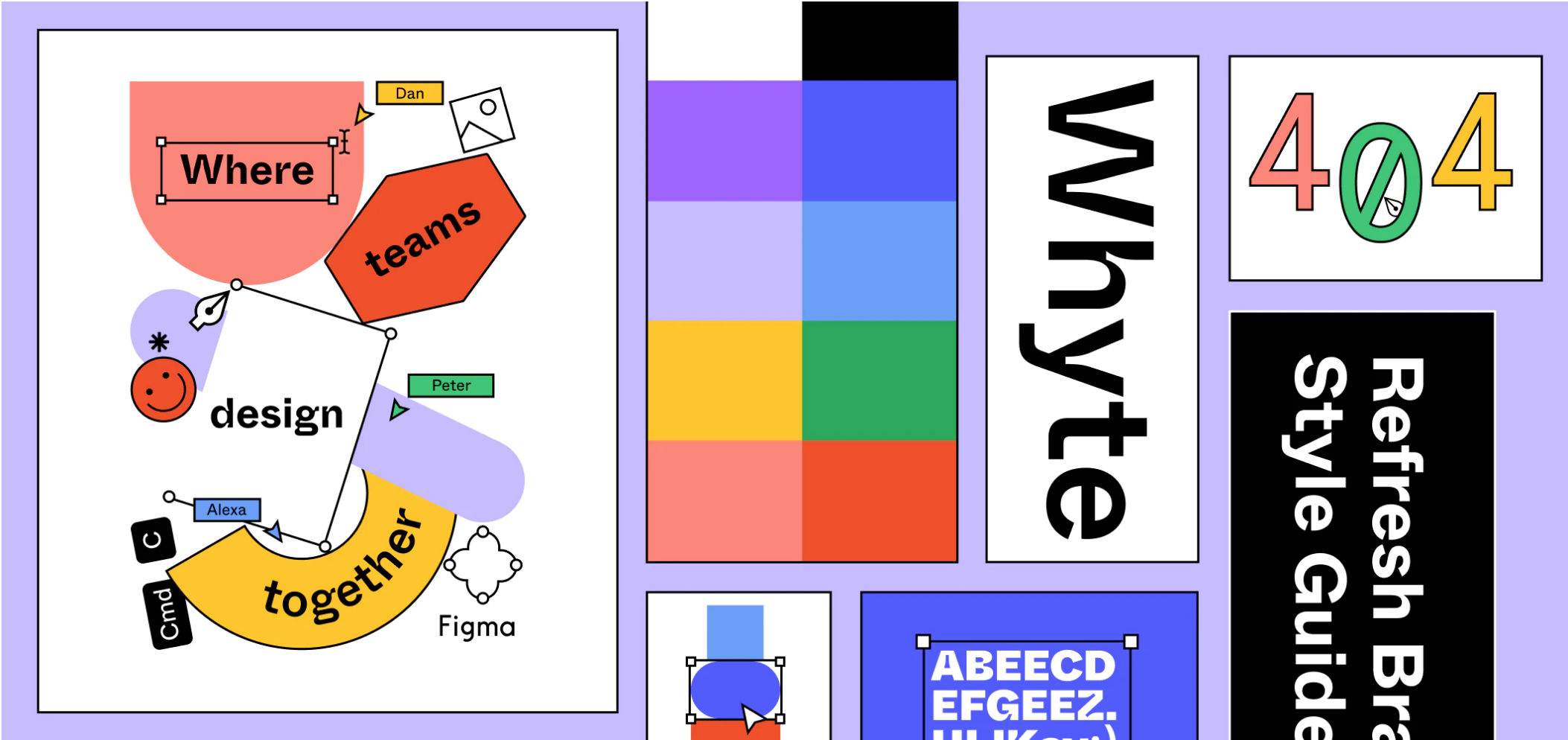
Figma, a company that makes collaborative design software, is a prime example of a tech company whose color palette stands out from others in their space. They combine primary colors (not the jewel tones you usually see in tech) with simple shapes in a way that feels almost elementary, but used in a harmonious way. The first time I saw their ads, I immediately wanted to learn more about the company — their branding feels so playful and curious.

Image credit: Dezeen

Image credit: Dezeen

Burger King

Burger King, who just launched their rebrand last month, is another example of a company bucking industry design conventions. Rather than the bright, in-your-face colors of companies like McDonald’s and Taco Bell, Burger King embraced a warm, nostalgic, and comforting color palette.

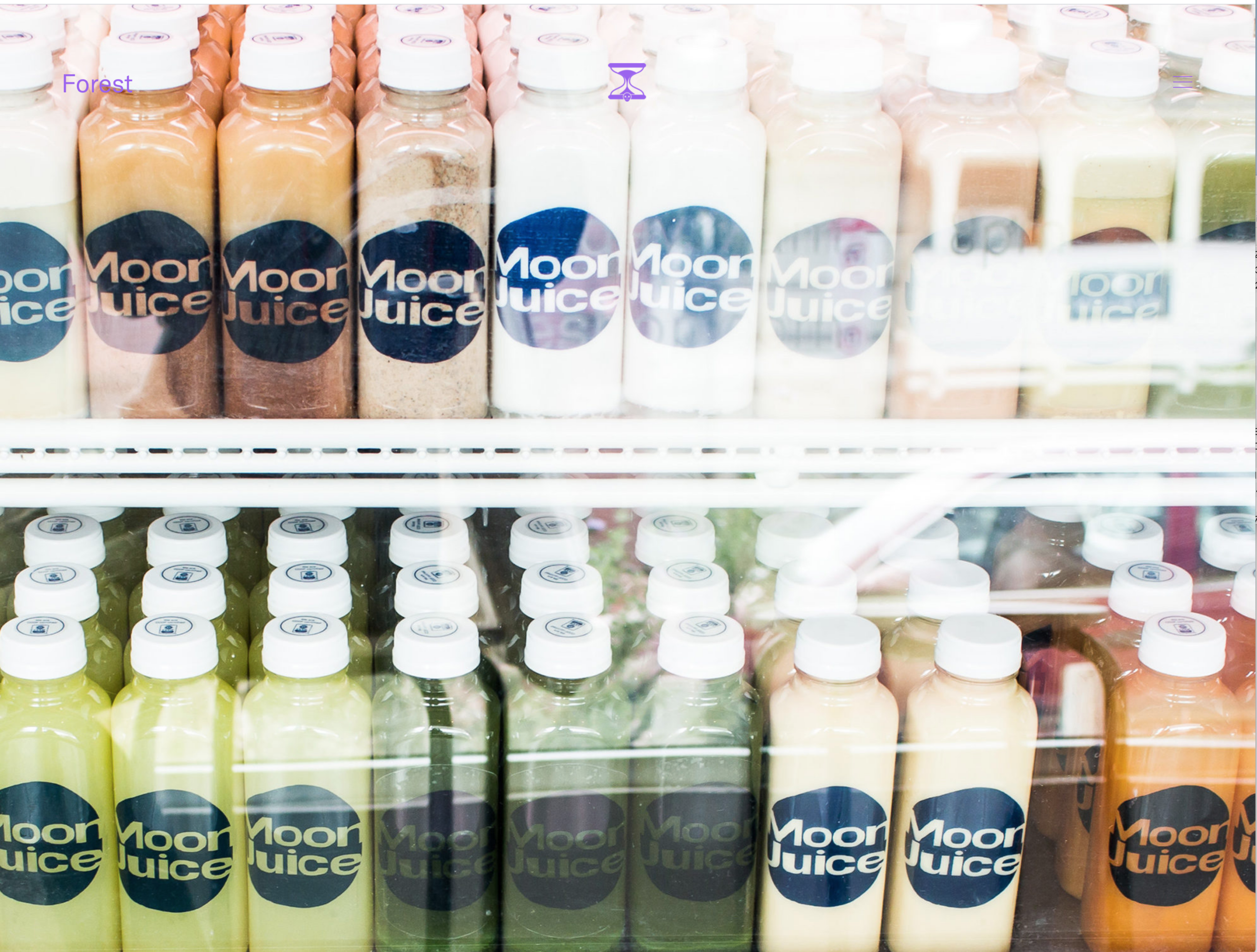
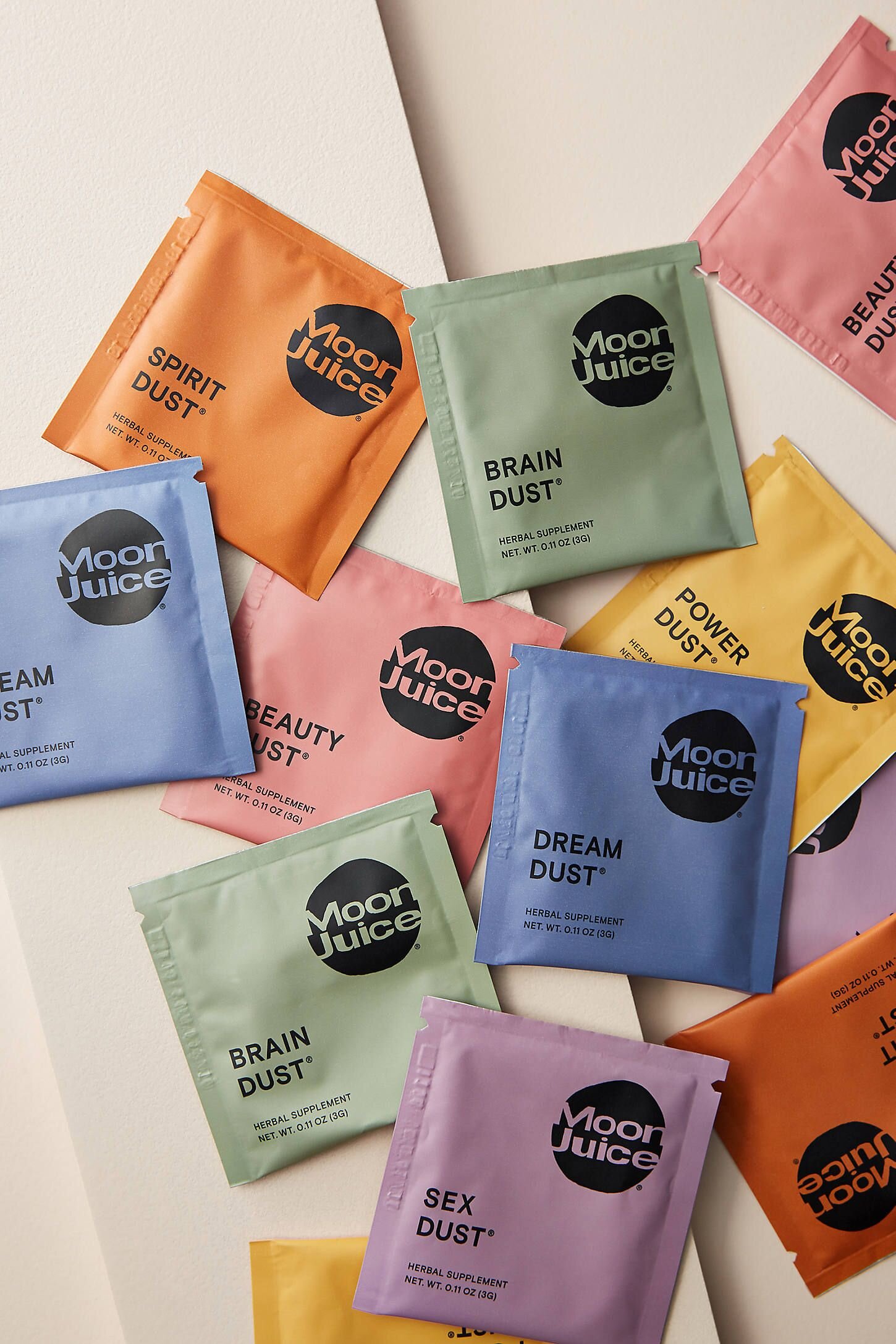
Moon Juice

Moon Juice, an LA-based juice and supplement company, draws their brand identity color palette from the fruits and veggies that go into their products. The rich shades they use give off a lush, organic, and natural vibe.

Finding Inspiration for Color Palettes

If you want to learn more about color theory or just get some ideas for colors you could use in your palette, check out the following resources.

Books:

  • The Secret Lives of Color by Kassia St. Clair: This is a super interesting book that recounts the origins and history of colors. While it looks at color through a scholarly lens, it doesn’t feel too academic — the way St. Clair talks about colors as if they were old friends makes the topic fun and approachable.

  • Interaction of Color by Josef Albers: This is the classic that everybody in art school is assigned. In this book, Albers presents a number of different color plates and studies to show how colors work together. It really gives you a sense of how color can be deceiving, and how certain combinations of colors can look like totally different ones.

  • A Dictionary of Color Combinations by Sanzo Wada: This book is a good pick for anyone who wants to expand their horizons when it comes to color. Wada showcases nearly 350 different color combinations that work well together, which serves as great fodder for artists and designers.

Resources:

  • Pantone Color Bridge Set: You can’t talk about modern color theory without talking about Pantone. Pantone’s color-coding system is used all around the world in graphic design, fashion, manufacturing, and more. Their color bridge is a set of swatches of thousands of different colors, and it’s largely considered the bible for designers looking for color inspiration.

  • Color Palette Cinema: This Instagram account shows stills from different movies and the color palette used within them which might help you recognize the colors you see in film and understand the emotional impact they have — romantic scenes, for example, are often shot through a soft yellow filter. After spending some time going through their posts, you’ll be better equipped to pay attention to and analyze the colors you come across on a daily basis.

The effect color has on our lives is hard to overstate. When color can do everything from making hearts race to changing the flavor of food, it’s safe to say that studying up on how to choose a color palette for your brand is well worth the effort. And if reading about color theory, identifying trends, researching the competitive landscape, hunting down the perfect colors, and testing them on your audience seems like overkill, don’t worry — it will almost certainly be worth it in the end. Find the perfect combination of colors to express your brand, and you just might capture your audience’s attention and earn their affinity.

Anastasia Salazar Ltd. is an independent design studio for tailored branding and digital designs. Reach out to learn how we can help you fuel growth and maximize your brand’s impact.
The Top Branding Trends of 2020 — & What to Expect in 2021 by Anastasia Salazar

2020 was, to put it lightly, a wild ride. In some ways, it seemed like the world began to move a little slower — no more rushing to the office in the mornings or cramming our schedules full of social engagements. In other ways, things moved at a breakneck pace. People and businesses alike had to adapt overnight to constantly-changing regulations and market shifts. And the world of branding certainly wasn’t exempt from this rapid change. The natural fluctuation in preferences that happens over time combined with the extraordinary events of the past year led to some seriously innovative and cool branding trends in 2020.

We’ve highlighted a few of the most notable ones below, as well as insight into how they might evolve over the year to come — read on to get some inspiration for your own brand.

2020 Branding Trends

Making Flat Designs Pop

In the past few years, many brands have favored flat designs without any dimension, shadows, or perspective. While it’s still possible to see strong examples, it’s becoming harder to keep the no-depth look fresh. Brands are starting to play with this trend more, though, as they incorporate new elements to add an additional level of complexity to their 2D design.

One example I’ve been seeing a lot of is 2D images with moving elements, like this Instagram post from artist and photographer Brooke DiDonato. It can be tough to get right, though. Brittany Spears’ “Swimming in the Stars” visualizer, for example, falls flat due to how busy it feels.

Another trend in adding depth to 2D design is mixing geometric patterns with textured and perspective design so that it feels more dynamic. Here’s an example from Dropbox.

dropbox-illustration-texture-geometric-patterns

Mixed Typefaces

In 2013, branding was awash with sans-serif typefaces, many of which were all-caps with a very condensed letterform (Bebas Neue seemed like it was everywhere). In later years, brands moved onto rounder sans-serif typefaces, like the new Google logo. Today, fonts like those are still popular, but brands are now mixing them with serif typefaces as well, especially in brand identities.

One brand that does a great job exemplifying this trend is Hims, a direct-to-consumer men’s health company. Their logo is a serif typeface, but all of their digital typeface is sans-serif — a good choice, since serifs can be hard to read in small print. That being said, I think their all-neutral palette could use some updating. Let’s get some color pops in there!

hims-website.png

To take serif fonts a step further, a lot of brands are using very thin stems and embellishments – something that will likely continue in the new year.

crane-serif-typeface-rebrand.png

Non-Design

In the age of digital media, content can be created and published instantly, and brands are taking advantage of that. With so many companies creating content, however, it’s no longer a differentiator. To stand out from their competitors, brands have to publish more and more content at an ever-increasing rate. Because of this, designers must work within a constantly shrinking timeframe, which can put a lot of constraints on the creative process. Paradoxically, though, these creative constraints can often result in innovation.

Many brands are now taking a low-effort design approach, where they leverage tools like emojis, gifs, Instagram Creator Studio, and templates to create quick and easy designs. Frequently, these designs are composed of simple shapes, limited colors, and just a few typefaces. 

Cove, a biodegradable water bottle company, is one example of a brand doing this look well. It’s super simple, but every element fits in and complements the others.

nondesign-cove.png

Retro Futurism

The design world always seems to be in love with the aesthetic from two decades before. Now that we’re in the 2020s, people have really begun to embrace the look of the 2000s — with a bit of a twist. Creatives are obsessed with nostalgia, but still dreaming of the future, which results in a unique retro-futuristic look that’s surreal and euphoric with lots of sparkle effects and glass type. This is especially present in digital media, like the example below from Fisk Projects.

2020-design-trends-evolution-branding-aluna-george

Some brands are kicking it back even further, like Kin Euphorics, which combines a 70s feel with a modern flair.

retrofuturism-2.png

The Natural Look

One silver lining of the COVID-19 pandemic is that it got people outside and helped inspire a renewed sense of appreciation for nature. A lot of brands seem to be acknowledging this with design that incorporates the outdoors and a more natural vibe. I’ve noticed this with a few recent commercials, such as this 90-second spot from Gucci or the More Nature campaign from Jeep.

I’m seeing more and more use of fuzzy and blurred imagery as well, which feels similarly organic.

the natural look.png

Source: Mary Herbert

Today’s brands are very aware of the world we’re all living in, and acknowledging it — and even finding some beauty in it — allows them to connect with their audiences on a more personal level. Although a vaccine is on the horizon, it will probably be a while before we return to normal, so I don’t see this trend ending anytime soon. 

Experiential Design

In a year where indoor gatherings are off-limits, a lot of companies found creative ways to reenact experiences in a digital format. And this wasn’t just limited to event-based businesses. Hulu came out with an awesome haunted house simulator called the Screamlands around Halloween (or, as they called it, Huluween).

experiential-design.png

Another experiential area more brands are leveraging is virtual reality (VR) and augmented reality (AR). Even the fashion world is adopting these technologies, with luxury brand Balenciaga recently announcing that their fall 2021 collection will debut in VR using avatars as models. AR is also taking off in popularity thanks to platforms like Spark AR studio for Instagram that make it more accessible. It’s bringing a lot of fun weirdness back to branding — check out this AR crossword puzzle filter The New York Times recently released.

As audiences become more comfortable with interactive experiences on websites and social media, my prediction is that brands will begin carrying it over to their native apps soon as well. 

Playfulness

If there’s one thing we could use more of right now, it’s levity. Thankfully, companies all across the board have been stepping up to the plate. Brands seem to have loosened up a little bit on their guidelines, giving them the flexibility they need to succeed on more casual channels like social media. As a designer, this is exciting, because it allows you to play with a brand in all its different forms and craft a slightly tailored visual language for each.

In addition to brand design, this is also happening in brand messaging. Companies are embracing a more down-to-earth tone of voice, sometimes successfully (Dollar Shave Club does a great job of being casual, clear, and often entertaining) and sometimes not (Cosmopolitan tries a little too hard with all the slang and abbreviations).

This playfulness has even extended to data visualizations. Companies are going beyond bar graphs in brand colors to display data in interesting and unique ways, like this piece from creative studio Datalands.

datalands-playfulness.png

Of course, these branding trends may not all be right for you — it’s much more important to embrace authenticity than whatever’s in the zeitgeist. But if you can figure out how to incorporate one or more in a way that feels true to your brand, you’ll be ahead of the curve in 2021.

Anastasia Salazar Ltd. is an independent design studio for tailored branding and digital designs. Reach out to learn how we can help you fuel growth and maximize your brand’s impact.
30+ Business Swag Ideas That Make Awesome Gifts by Anastasia Salazar

business-swag-holiday-gift-anastasia-salazar-design-blog-header

We've all left a conference or event drowning in useless corporate swag like fidget spinners or keychains, or things we already have too many of, like pens and cheap water bottles. 

But business swag doesn't have to be something your prospects, clients, and employees throw in the junk drawer and never look at again. 

When done right, merch can be fun, clever, and meaningful — making it the perfect choice for a gift and a fantastic way for prospective clients to remember your business. 

If you're not sure which branded merch to go for, we've put together a guide to the best business swag ideas. From tote bags to temporary tattoos, you'll be spoilt for choice!

What makes great business swag?

Before we dive into specific business swag ideas, let's go over a few basic principles. Swag should always be:

Useful

Is anyone really going to use a mini frisbee or a pair of cheap sunglasses more than once? Probably not. 

Novelties like toys get old fast, and if you're going to wear sunglasses, you'll probably want to choose your own style. 

When considering swag options, try to choose something that people can use over and over.

Thoughtful

You don't want your swag to come across as a last-minute afterthought.

A well-thought-out piece of merch shows clients and employees that you have their best interests at heart.

Think of how you can tailor your business swag specifically to your company. If you're creating a gift for employees, for example, you could incorporate some inside jokes or references into the design.

You can also choose an item that relates to your company in some way. For example, if you work in the travel sector, you could opt for a luggage tag that doubles as a phone charger for when people go on vacation.

If you work in IT, USB drives and webcam covers are functional options everyone can use.

Seasonal

Certain merch ideas work best at different times of the year.

For example, an ice scraper may go down well in the cold and chilly winter months but won't be as well-received in the summer.

Specific events can also inspire merchandise ideas. During the Olympics, sports-related business swag like beachballs and fitness towels were popular options!

I always recommend planning ahead for the best results — identify when you need your business swag and know what your recipients want to see.

High-quality

Your corporate swag doesn't need to be made of luxury materials, but it should be well-made: no loose threads, tears or jagged plastic seams.

Most manufacturers will be happy to send you a sample so you can check the quality before you commit.

Once, I was helping a client send out customized candles, and I received a sample from a manufacturer that left a smoke mark on my wall — needless to say, we didn't move forward with them!

Subtle

I've been gifted some swag over the years that would have been great… if it didn't have a gigantic logo plastered on it. 

As much as you want to showcase your brand, people are often hesitant to wear clothing or use an item that's so conspicuously branded. Nobody wants to feel like a walking advertisement.

Less is more when it comes to business swag — keep your logo small and focus on the placement.

Business swag ideas your clients will love

When it comes to business swag, there's something for every business, every customer, and every budget. It's just a case of knowing what to choose!

If you're stuck for inspiration, here are some great ideas.

Easy logo solutions

If you want something affordable and easy to create, these branded merch ideas are great starting points. Just add your logo, pick your brand colors, and you're ready to go!

(Make sure to send the vendors a file with print versions of your logo. Ask if they can do a Pantone match to find the exact brand color — CMYK outcomes can vary widely in quality.)

  • Webcam covers for laptops

  • Mints

  • Door opener: These let you open push, pull, or turnstile doors without touching them. They exploded in popularity during the pandemic and are still popular today!

  • Hand sanitizer

  • Thumbdrives/USB flash drives

  • Water Bottles: Only offer a water bottle if it's a keeper like this — people usually have more than enough flimsy plastic or metallic-tasting water bottles at home

  • Portable chargers

  • Pencils/pens

  • Blanket

  • Picnic blanket

  • Jackets/sweaters/hoodies: Again, these are only worth making if they're high-quality — A quarter zip is always a good choice

  • Notebook

  • Car phone mount

  • Tile Mates: These are small trackers you can attach to your wallet, key ring or laptop and locate with your smartphone

Creative solutions

If you're game for some more design-intensive business swag ideas, these items are perfect for helping you creatively express your brand.

  • Art prints

  • Tote bags: Choose a cool illustration or playful typography to make a tote bag that stands out from the rest

business-swag-holiday-gift-tote-bag-1
business-swag-holiday-gift-tote-bag-2
  • Pop socket: These are cool if you choose the right design — maybe something eccentric or fun like a donut or an inside reference to your company culture

  • Iron-on patches

  • Stickers: Do a whole sheet of stickers with different designs to show off the playful side of your brand — here are a few we designed for our client Hot&Heavy

business-swag-holiday-gift-stickers-1
  • Shot glasses: One of the more memorable pieces of swag I got in recent years was a shot glass along with a two-page brochure of cocktail recipes. If you go this route, make sure to include a few mocktails on there so those who don't drink feel included too

  • Custom socks: As a kid, getting a pair of socks for a gift was a let-down — but as an adult, it rocks! Plus, you can make them a little more funky and out there since they're mostly covered up throughout the day. Try experimenting with fun patterns and colors! 

  1. Pins: I worked with one of my clients to do a whole set of pins to give out on employee anniversaries. We went with a varsity theme since they would greet new employees with "Welcome to Varsity." We included some other insider references, too, like the high five design — a nod to how their CEO gave out high fives at every all-hands meeting.

business-swag-holiday-gift-lapel-pins-1
  • Kids’ merch: Getting clothes for employees can be tricky because everybody has their own personal taste, but kids tend to be less picky. Plus, they’ll look cute in just about any merch you design.

business-swag-holiday-gift-kids-clothing-t-shirt
  • Matches or lighters: These won’t be a good fit for every company, but they’re perfect for restaurants, bars, and hotels.

business-swag-holiday-gift-matches-restaurant
  • Branded wrapping paper: To go the extra mile, you can wrap your gifts in branded tissue paper or wrapping paper — swag on swag!

Environmentally-friendly ideas

Some brands refuse to offer business swag because they don't want it going to landfill. 

The great news is that there are now lots of fantastic options that are long-lasting, eco-friendly, and show your sustainable credentials.

  • Reusable straw: I love the collapsible ones that you can fit into a keychain to carry around with you

  • Desktop garden kits: Plant the seeds in the pot, water them, and wait for them to grow. These are great for bringing a pop of greenery into the office

  • Beeswax wraps: A sustainable alternative to plastic wrap, these are reusable and fully compostable

Corporate swag bags

For big moments or events, combining a few items together in a kit can make your customers and employees feel like VIPs.

  • Welcome kit: Some businesses show their appreciation for new employees or clients by putting together a bundle that helps them get to know the company better. When I joined the Wing's co-working space, I got a flight-themed welcome kit with a flight manual (information packet), passport ticket (guide to the neighborhood), coupons, welcome letter, and notepad. It was a really nice touch that made me excited to be a member

  • Conference kits: Swag bags are a must-have at conferences today. There's a vendor I love that offers a customizable swag-in-a-box package. You can choose from things like mints, hand sanitizer, pens, notebooks, water bottles, bags… just choose your elements, and they'll put a pack together

  • Travel kits: One of my favorite kits I've worked on was for a hotel chain called StayCity back in 2015. They offered a whole travel kit with branded eye masks, door tags, snacks, and coffee cups, each with a slogan like "stay rested," “stay fed,” “stay awake”. It was so unique and valuable

business-swag-holiday-gift-kit-1
business-swag-holiday-gift-kit-2-travel
business-swag-holiday-gift-kit-3-travel

How to choose the perfect vendor

Once you’ve decided what kind of business swag you want to give out, it’s time to choose a vendor that can deliver the goods. Here are a few tips for finding the right one:

Go local

I try to choose a local vendor whenever I can for a few different reasons. It’s more eco-friendly, you’ll get responses within your own time zone, and you can see a proof first to make sure it’s what you wanted.

This is especially important if you have a rarer brand color or specialized design request. Some vendors will mail you a sample if you don’t live nearby, but it takes longer than stopping by in person.

If you’re in the San Francisco Bay Area, a few vendors that I’ve had a great experience with are Camputee Press, Free Gold Watch, and Colpa Press.

Check their own branding

I always look for vendors that have good branding in terms of their logo, website and marketing materials. This shows that they’re passionate about design and pay attention to detail.

It’s always reassuring to work with an established vendor, so look up how long they’ve been around and what their customers say.

Ask questions

Don’t be afraid to ask questions. A good vendor will be happy to answer them.

Also don’t hesitate to ask for their opinion. Your vendor of choice may offer recommendations you might not have considered, or be able to spot potential issues you might not have thought of.

Substandard materials, unimaginative designs, and gaudy logos have given business swag a bad rap over the years. 

However, a lot of vendors have stepped their game up since then, and if you’re willing to put in the time, effort, and resources, you can definitely create gift-worthy products. 

Whether you go with one of the business swag ideas above or one of your own, a little thoughtfulness and creativity will go a long way towards providing an exceptional experience for your prospects, clients, and employees.

Anastasia Salazar Ltd. is an independent design studio for tailored branding and digital designs. Reach out to learn how we can help you fuel growth and maximize your brand’s impact.
5 Holiday Marketing Ideas to Inspire You This Season by Anastasia Salazar

ASL_Design-Blog-Holiday-Marketing-Ideas_v1_Website.png

With the holiday season just around the corner, companies everywhere are gearing up their marketing efforts. But in an increasingly competitive landscape, it’s not enough to just offer discounts or sales anymore. Today’s most cutting-edge companies are embracing original and inventive holiday marketing ideas to meaningfully connect with their target audience during the most wonderful time of the year. If you’re looking for some inspiration to help your brand stand out this holiday season, check out the cool marketing examples we’ve rounded up below.

Top Holiday Marketing Ideas

Holiday Cards

Cards are a traditional staple of holiday marketing, but that doesn’t mean they can’t be fresh or fun — there are tons of different ways to play with the content and the format to create something clever and memorable. Whether you choose to do something classic or innovative, heartfelt or playful, modern or retro, it’s a perfect opportunity to express your brand.

5-holiday-marketing-ideas-to-inspire-creative-card.jpg

One holiday card I really enjoyed working on a few years back was for my client Anaplan, a company that makes cloud-based planning software. They wanted a card that could be sent to employees as well as clients both in print and digitally. Since Anaplan is a global company, they would have to translate it into a few different languages, meaning my team and I couldn’t use any decorative lettering. We ended up choosing a mixed media design that incorporated a handcrafted element. We got a big foam board, cut out a bunch of holes, and stuck in Christmas lights in the shape of their logo. We knew that image would work well for printed cards, but we also thought it could be fun to make it into a gif for digital applications — so we did a photoshoot of the logo with the lights turned both on and off, creating an animated gif with flashing light bulbs. The end result was a cool, unique card with a personalized feel due to its handmade touches.

It’s worth mentioning, though, that a holiday card doesn’t always have to be a card in the traditional sense. This example from creative agency Red & Co. — a wine bottle with a “drunken love letter” on the label, customized for each of their clients — is one of the best holiday marketing ideas I’ve seen. Mira Kaddoura, Red & Co. founder and executive creative director, explained: "This industry can be hard on us and our clients, so we thought a funny, cheerful, (pretend) drunken holiday card would make our clients laugh a little and remind them of what we’ve been able to do together."

5-holiday-marketing-ideas-to-inspire-creative-card-2.jpg

You could even do a hologram like the image seen below. I know it looks intimidating, but holograms are actually surprisingly easy to make. They’re really inexpensive, too — all you need is a projector.

ASL-5-holiday-marketing-ideas-to-inspire-creative-hologram.jpg

Ad Campaigns

Today, it seems like nearly every company does a campaign around the holidays. This does make it a bit more of a challenge to grab people’s attention, but it doesn’t mean it’s not worth pursuing — it just means you need to make yours stand out.

One of the more memorable holiday marketing campaigns I worked on in the last few years was a Black Friday campaign for Udemy, an online learning platform. This stuck out for a couple of reasons, one of which was the “shop smart” concept the campaign touted. Over the years, retailers have struggled with the fact that today’s consumers are more hesitant to buy physical goods. People are choosing to simplify rather than load up on items that will sit around in their closet or garage untouched. We decided to capitalize on that trend for this campaign — instead of buying some shiny new toy you’ll never use, why not invest in your skill set and your career? Udemy offered a special of $10 courses throughout the whole week, targeted toward career-minded individuals hoping to climb the corporate ladder as well as businesses interested in employee professional development. 

ASL-5-holiday-marketing-ideas-to-inspire-creative-campaign-udemy.jpg
ASL-5-holiday-marketing-ideas-to-inspire-creative-campaign-2-udemy.jpg

Another thing that set this campaign apart was the use of bright colors. Just about every other company with a Black Friday campaign used a black color scheme to play off of the name, so these colorful ads really stood out in comparison. We chose colors and typography that reflected Udemy’s brand, and the 3D gravity free objects we featured were universal enough that they worked for all of the different courses the company offered and segments they targeted.

Microsites

Since the onset of the COVID-19 pandemic, the number of people working from their offices has drastically decreased. For B2B companies that like to send their clients and prospects physical pieces, this has posed a special challenge. The good news? There are other holiday marketing ideas that work just as well. Microsites, for example, are a fun and flexible digital option — plus, they can provide you with a ton of valuable data.

One of the best examples of a holiday-themed microsite I’ve seen comes from Emotive Brand, a brand strategy and design agency I’ve worked with in the past. They created an interactive A-Z dictionary of emotions for brands who might need help “unwrapping” their feelings. Every time you mouse over a word, you trigger a little representative animation. You can click on each word to get a definition of it as well as a quote featuring it. At the end, they have a few paragraphs explaining the concept behind it:

“These 50 feelings are a selection from 301 emotions we use to help our clients build successful brands. For each entry, we have paired graphic design and animation with quotes from our team and influential thinkers. The result is a visual metaphor that aims to not only illustrate the emotion, but bring it to life.”

It’s an amazing way to drive home the unique value proposition that the agency offers, and such a creative idea. If you decide to create a microsite, remember that it doesn’t have to be some cookie cutter landing page for a holiday deal — a playful, unique direction will be way more engaging.

Social Media

Social media is one of the best holiday marketing ideas because it’s so accessible. Everyone from small mom-and-pop shops to big corporations can put together a few fun social posts, regardless of their budget. And because social media is a more casual platform, brands can really let their hair down in a way that humanizes them. It’s the perfect place to post something cute or cheeky that appeals to the digital age. 

Holiday social media posts lend themselves well to video — I’ve seen companies share recordings of employees lip-syncing to Christmas carols, funny skits, stop-motion animations, etc. One super easy, low-budget way to leverage video is a holiday ecard from JibJab. Just upload a few photos of your team and you can bring them to life with themes like holiday disco, snowball fight, or office party. And speaking of team photos, another cute option could be sharing pictures of your different team members celebrating the holidays as children.

Whatever you end up choosing, don’t be afraid to have some fun with it. Social media is a channel where audiences respond well to brands embracing their playful side.

Gifts

Of course, you can’t talk about the holidays without mentioning gifts. Sending customers/clients or prospects some branded company swag — as long as it’s useful — can be a thoughtful way to thank them for their support and remind them of what you have to offer.

Anastasia-Salazar-2021-calendar-risograph-holiday-marketing-ideas-to-inspire.png

This year, we created a calendar. It’s a great way to show off what we can do in terms of design, but also a useful gift — just about everyone can use a calendar. And I don’t know about you, but after what a mess 2020 has been, 2021 can’t come quickly enough! We went with a bright, lively design to evoke a cheerful and uplifting mood, and decided to risograph it because this type of printing creates such fun colors, textures, and overlays. 

There are tons of other options for cool holiday gifts. The image below, for example, is a gift from Austin-based ad agency GSD&M. GSD&M decided to go beyond the typical holiday gift for something more buzzworthy — literally. The agency sent its clients and partners jars of pure honey, collected from bees it has been hosting on its own rooftop. Everything from the jars to the labels, fonts, colors, embossed note and even the honey-inspired recipes inside were hand-selected and created in-house. Keep an eye out for even more company swag gift ideas in our next blog post!

ASL-5-holiday-marketing-ideas-to-inspire-gifts.jpg

For many companies, the holiday season is the most critical period of the year. While it can be tough to attract your audience’s attention amidst shopping, travel, and a deluge of marketing efforts from other brands, you’re also presented with an amazing opportunity to get creative and take risks that you might not normally. Hopefully, these holiday marketing ideas will inspire you to pull off something truly special. And if that happens, you won’t just capture your audience’s interest for a month or two — you’ll stick out in their minds for the entire year.

Anastasia Salazar Ltd. is an independent design studio for tailored branding and digital designs. Reach out to learn how we can help you fuel growth and maximize your brand’s impact.
How to Kick Off a Rebrand or Brand Refresh by Anastasia Salazar

ASL_Design-Blog-Rebrand-Next-Steps_v1_Website.png

In our last blog post, we shared a quiz to help you figure out whether it was time to modernize your brand. If you realized your brand was overdue for an update, you might be wondering: What comes next? A rebrand or brand refresh is a big project, and it can be challenging to figure out where to begin — especially if you’ve never done one before. So to help you start off on the right foot, we’re going to discuss exactly which steps you should take after deciding your brand could use a revamp.

Rebrand or Brand Refresh Next Steps

Create an Audit

Although branding agencies will often guide you through the creation of an audit as part of a brand refresh or rebranding, getting a head start on one beforehand can provide you with valuable initial direction on your project as well as help you gain internal buy-in (more on that later). It may also save you money when it does come time to hire an agency by allowing you to narrow the project scope, making it an especially attractive option for smaller or budget-constrained companies.

The audit should focus on where the gaps are in your brand and how they could be improved. Make sure to use data — such as market research and customer interviews — to back up your findings and recommendations whenever you can. Here are a few elements in particular that you might want to include in your audit:

  • Purpose: Having a “why” behind your business is critical to growth and success. If you don’t have a clear one at the moment or aren’t in agreement across your organization, you’re missing out on a huge opportunity to align your team and motivate them to do their best work.

  • Narrative: Similar to your brand purpose, your brand narrative describes who your organization is and what you stand for. It may include your history, promise to customers, or your perspective.

  • Positioning: Positioning is all about how your brand is represented — is your brand enforcing the right message? Is it helping the company grow? Do you think it should change in any way? Key to answering these questions is a thorough, data-backed understanding of who your target audience is. Otherwise, your strategy may be entirely off-base.

  • Brand Architecture: Many companies have more than just one core product or service. While it’s important to keep your brand largely consistent, you may want to alter it slightly for certain product lines or services in order to differentiate them from one another. A brand architecture is a visual hierarchy that helps you organize all of these variations of your branding and ensure that they all work well together. 

  • Competition: First, identify the brand category you fit into (e.g. data analytics platform, eCommerce clothing retailer, fast-casual restaurant). This may have changed over time,  and given how critical it is to your audience’s understanding of your company, you’ll need to check in on it every once in a while. Then, list all of the other companies that you compete against within that category, paying close attention to the strengths and weaknesses of their respective brands.

  • Creative Assets: Creative assets are the most tangible representation of your brand, and often take the form of templates for different use cases — digital banner ads, social media cover photos, logo lock-ups for your homepage. Take stock of which creative assets you currently have and which ones you’ll need in the future.

  • Find more ideas here

As you gather this information, take note of how much of a disconnect there is between where your brand is now and where you want it to be. If the difference is drastic, you may want to go all out and pursue a rebrand. If you’re within range of where you want to be, though, it may only take a brand refresh to help you reach your goals.

Make Your Case

ASL_Design-Blog-Rebrand-Next-Steps-make-your-case.jpg

In order to go through with a rebrand or brand refresh, you’ll need approval from your larger organization, including your leadership team. This can sometimes be a challenge, as results-driven business leaders don’t always see the immediate value of a strong brand. But if you’ve put together a thoughtful and thorough brand audit, your job will be much easier. Here are a few tips for presenting your audit and persuading your audience: 

  • Explain what a brand does and how it impacts you: It can be hard to define what exactly a brand is, but describing what it does is much simpler. Discuss how a strong brand can lead to better ROI, a more aligned team, higher employee engagement, and consumer affinity. To support this, try researching how rebranding or brand refreshes have helped other companies in your sector, or draw on your own experience. Share a time when a new or updated design led to improved business results, like an ad campaign or social media revamp. Remember: The more you can concretely cite how a brand update would benefit you, the more likely it is that you’ll get the go-ahead.

  • Focus on what’s most useful for your company: Design needs vary significantly from organization to organization, so highlight the specific ways in which revamping your brand would be beneficial for your company in particular. At Google Play, for example, we did a ton of promotions for mobile gaming. When I was pushing for a refresh, I pointed to the market research we had gathered on our different customers’ wants and needs, then connected that to specific visual examples in our collateral that were misaligned with their feedback.

  • Do an alignment exercise: This is a good strategy for getting a team that is new or hesitant to branding updates on board. By surveying different members of your organization on their understanding of the brand, you can highlight any misalignments to those who feel the brand is fine as it is. You can ask questions like “what’s our competitive advantage,” “which three adjectives would you use to describe us,” and “how does our audience see us?” If you’re in need of a rebrand or brand refresh, the answers will likely vary. Share those results with senior leadership for a quick and easy way to demonstrate that you’re not fully aligned and, as a result, struggling to move forward.

Envision Your Future

Once you get the green light to update your brand, it’s time for the fun part — envisioning how that might look. There’s no limit to the number of directions you could go in, but before you commit to one, I recommend trying a couple of exercises for guidance:

  • Brand mapping: Brand mapping exercises are perfect for helping you figure out which traits you want your brand to embody, and our brand mapping worksheet is a great one to start out with. This worksheet contains an assortment of scales for different brand attributes — mechanical to human, quiet to loud, casual to formal, to name just a few — and allows you to use stickers to pinpoint where you fall on that scale now and where you want to in the future. It can also be helpful to add your competitors to the chart so that you can think about how to best stand out from the crowd.

  • Mood boards: Put together a presentation with examples of brands and design that inspire you and try to identify the elements you think could work for your company’s brand.

A quick note — it’s important to find balance between authenticity and aspiration when modernizing your brand. You’ll want a design that reflects your organization, but ups the ante. If you choose something too similar to your current branding, it might not feel different enough to your customers and employees. On the other hand, be careful about choosing something drastically different than who you are. A tax firm, for example, probably shouldn’t try to emulate the whimsical branding of a trendy beauty product company.

If you’re ever unsure about whether your desired branding authentically reflects you, don't be afraid to reach out to employees, customers, and design professionals for feedback.

Look Around You

Design is a crowded space. If you really want to stand out from others, you’ll need to search far and wide for inspiration. Design blogs are a good place to start. I like AIGA’s Eye on Design and siteInspire for websites. Thumbing through design books works well, too. Fortunately, almost every major city has a cool art bookstore (in San Francisco, I like William Stout Architectural Books). If you want to dig deep, you can even attend design conferences or festivals.

I also suggest just keeping an eye out for the design you encounter in your daily life. If you come across an ad for a brand with a great social media presence, for example, like the post so that more of their content appears in your timeline. If you see an ad that you like on the metro, snap a picture of it with your phone. Museums are another excellent source for inspo — head to one with a notebook and pen, and jot down which pieces speak to you. All of this will help you generate ideas when it comes time to pick a particular design direction.

Find the Right Partner

With a project as big as rebranding or a brand refresh, you’re almost certainly going to want to work with an agency rather than just relying on your in-house team. Before you identify specific agencies, though, make sure to think about your budget, timeline, and goals. You should also identify which assets are the most important for you, whether it’s a new presentation template or branded whitepapers. 

Next, it’ll be time to start your agency search (read here for a few tips on how to do that). Create an agency shortlist, and reach out to them to learn more about their approach, find out the cost, and provide some context around your project. Even early on, you should be able to tell if their work aligns with your visual preferences.

Branding isn’t just a one-off investment — it’s a continually ongoing process. And if you want your brand to stand the test of time like Apple, Nike, and Google, you’ll need to update and modernize it from time to time. The good news? If you’ve got a strong foundation, a strong brand can make you virtually unstoppable.

Anastasia Salazar Ltd. is an independent design studio for tailored branding and digital designs. Reach out to learn how we can help you fuel growth and maximize your brand’s impact.

The Most Common Branding Mistakes to Avoid by Anastasia Salazar

ASL_Design-Blog-5-common-branding-mistakes-v1_Website.png

We’ve already talked quite a bit about the branding dos on our blog, like how to create a brand strategy, what every brand identity needs and inspiring brand identity examples. Now, it’s time to get into the don’ts. Just as you want to follow best practices, it’s important to know which common branding mistakes to avoid — after all, there’s nothing worse than majorly investing in a new brand only to realize it needs to be scrapped or reworked. 

Whether you’re creating a new brand from scratch or going through the process of a rebrand, avoid the five following missteps to help guarantee that your brand stays relevant, consistent and right for you for years to come.

5 Branding Mistakes to Avoid

1. Relying Too Much on Trends

A lot of companies think that basing their branding on whatever’s “in” at the moment will help them come across as hip, but this backfires pretty frequently. While it’s good to have a pulse on the design trends in your industry, you don’t want to just copy what the cool kids are doing — I see this happen in the tech industry fairly often. This is especially the case for mid-size companies that are gaining traction but haven’t quite “made it” yet. Organizations like these are often afraid to take risks, and as a result, they adopt the same style as everybody else, assuming that it’s an industry best practice.

But copycat branding isn’t exclusive to the tech industry. One example I’ve come across recently is glasses retailer Zenni. A visit to their site reveals a lot of tired design concepts: monochrome backdrops, minimalist photography, hand-drawn illustrations and a combination of serif and sans-serif fonts. None of these are necessarily bad in and of themselves, but Zenni’s execution falls short. Their visual approach doesn’t really add anything new — just the same style that’s already so pervasive in the direct-to-consumer market.

The problem with trying too hard to fit in is that you almost always fail to stand out — and if executed poorly, your brand identity could look like a cheap knockoff of the brands that are doing it right, or quickly become dated. When developing your brand, ask yourself: Is it unique, ownable and distinct from your competitors? If not, it might be time to go back to the drawing board.

2. Branding That Doesn’t Represent Your Company 

Authenticity is everything these days. Consumers are quick to call out brands that exaggerate their claims or pander to their audiences without being able to back it up — there are even entire online communities dedicated to naming and shaming offenders. Still, there are plenty of designers and agencies that develop aspirational brand strategies that position their clients against the competition without taking the time to really understand who they are.

No matter how great your brand strategy and identity are in theory, an inauthentic brand will be difficult to enforce and maintain. And when these inconsistencies present themselves — say, an employee creates an off-message one-pager or sales deck based on their own internal perception of the company — your users will feel confused, suspicious and deceived. Not a great look in this day and age of corporate skepticism. As frustrating as it might be, you can’t just change your target audience’s impression of you on a whim. If you try, you’ll most likely end up losing your customers’ trust.

3. Too Many Stakeholders

ASL-Design-Blog-Common-Branding-Mistakes

I’m willing to bet that you’ve been in a situation where having too many cooks in the kitchen led to chaos. With too many different (and sometimes, conflicting) opinions but no clear leader, processes fail to move forward and mistakes are made. Let’s say you have one agency working on your brand identity, another on your packaging, some freelancers doing web design and your internal team running the blog. Getting all of those different groups properly aligned on how to execute your brand will be a complete headache, let alone developing a brand identity that everyone signs off on and understands.

There’s usually at least one person (or even a whole team) that misunderstands an aspect of the brand, and if that is spread across five different groups, the guidelines become even more muddy and unclear. While you may not be able to do it all with one in-house team, limiting the amount of different groups working on branding as well as allowing them to take the time to get to know the brand strategy and where they fit into it will help ensure that the vision and direction of your brand don’t get lost in the shuffle.

4. Not Spreading the Word

Another one of the most common branding mistakes to avoid? Ineffective communication. In my experience, great branding is usually about 30 percent concept and 70 percent execution — and the key to strong execution is understanding. You can make a big splash about your brilliant new brand strategy, but if you don’t properly educate your stakeholders on how to maintain it, it won’t last long. When working on your brand, make sure to keep everybody who will touch or make use of it in mind. Likely, even the far reaches of your company and partners will need access to at least some part. So how can you effectively spread the word?

To start, they’ll all need to know the basics: messaging, brand idea, logo, color, type, graphic devices, etc. Making the corresponding assets, such as logo files or letterhead templates, widely available and easy to find is essential. Even application-specific information can be handy, like how to enter the hex code for your brand colors in Google Slides or PowerPoint/Keynote.

You can’t just hold a one-time training session and call it a day, though. Give the leads of each team a more in-depth walkthrough of how to use the brand in their work, encouraging them to pass that knowledge onto their current team and any new folks that come in. Come up with a press kit for media outlets, and guidelines for partners. Let people in your company know that they can (and should!) reach out to you if they have any doubts or questions regarding the brand. And don’t hesitate to hold multiple trainings to help drive home the message or provide updates as they surface.

5. One-and-Done Branding

Branding is a massive undertaking, and it can be a long, tiring process. But don’t let that convince you that it’s not worth refreshing. To keep the process smooth, designate a brand gatekeeper to own the guidelines and approve assets accordingly. This doesn’t just extend to your internal team, but also to any partners or media outlets that may want to use some element of your brand, whether that means photos of your team and office or just a logo.

The best way to keep everything up to date is to record when the brand has evolved, and share that information with everyone who needs it. A log at the end of your brand book is a great place to keep track of that information. When something gets added to the mix, like a new marketing template or ad campaign, your brand gatekeeper should make note of it, document images of the updated content, add guidelines or examples as necessary and enforce the new developments. Doing this will preserve institutional knowledge, and ensure that your brand remains relevant and consistent no matter how the stakeholders change over time.

Anastasia Salazar Ltd. is an independent design studio for tailored branding and digital designs. Reach out to learn how we can help you fuel growth and maximize your brand’s impact.

4 Design Project Management Tips for Tight Deadlines by Anastasia Salazar

ASL-Design-Blog-Design-Project-Management-Tips

Ask a client what their deadline is, and nine times out of 10, they’ll say “ASAP.” Today’s business world moves at a breakneck pace, and in order to keep up with their competitors, a company’s design process must be just as nimble. This is especially true here in the Bay Area, where startup culture and a “move fast and break things” ethos have become the standard at companies of all sizes and industries. If you find this rate of turnaround a little bit dizzying, you’re not alone. The good news? With just a few adjustments to your design project management process, you can seriously boost your efficiency.

In an ideal world, designers would be given a generous amount of lead time to complete projects — but when this isn’t an option, skillful project management is your next best bet. Whether you’re designing a global ad campaign or launching a product, the tips below will help you effectively manage a team when you’re racing against the clock.

Project Management Tip #1: Define Your Process

You might have to invest a little bit of time up front, but establishing a thorough process before you even begin working on a project is one of the best ways to move quickly in the long run. Start by thinking through your workflow — how many rounds of design stages and feedback there will be, what they’ll entail and when they’re due. A few things you should consider during this stage:

  • What exactly will you deliver with each round? For example, will initial design concepts contain ready-to-go, proofread copy, or just placeholder text?

  • Where will files be stored, and how will they be organized?

  • How will feedback be given? Is there a certain platform you’ll use, or will you just share thoughts over email and in meetings?

  • When will feedback be final?

  • When will you meet, and how — in-person, Slack, video conference?

  • How and where will change be communicated?

  • Who’s accountable for which tasks, like gathering feedback, managing assets, proofreading, etc.?

Project Management Tip #2: Get Everybody on the Same Page

Once you’ve outlined as much of the process as possible, discuss it with both your client and your internal team to help set expectations for what will be delivered and when. Getting everybody aligned is key, so try to schedule a good amount of time (ideally in-person) to thoroughly review your plan and address any questions that might come up. If possible, don’t just invite the decision makers at your client’s company — also bring in the devs (or whoever else will be implementing your assets) to clarify what they need from you in order for their team to move forward. And of course, encourage prompt and open communication at all times to keep everything running smoothly.

Project Management Tip #3: Create Guidelines

When you’re in a time crunch, templates can be your best friend. The guidelines they provide ensure that you don’t have to reinvent the wheel each time you develop a new asset, and help you stay consistent even as you move between iterations. Some of the templates I recommend: 

  • Create a grid - Grids are the underlying structure for your layout, regardless of the specific content that appears on each asset. Your grid template should signify the margins and help organize where objects will be placed. Here’s an example:

Source: Stephanie Pay

Source: Stephanie Pay

  • Create templates - Group your assets into buckets based on the type of information they contain or the layout and create a specific template for each one. For example, if you're creating ads for an ad campaign across multiple placements, create templates for portrait printed ads and landscape printed ads, portrait digital ads and landscape digital ads. If you're creating an E-commerce site, create a template for product pages and the checkout flow. Here’s an example of templates created for a digital ad campaign:

4-Essential-Graphic-Design-Project-Management-Tips-templates
  • Design elements - Compile a collection of the different design elements you’ll be using, such as character styles, paragraph styles and color palettes.

4-Essential-Graphic-Design-Project-Management-Tips-typography-styles
  • File naming conventions - Sending the wrong files or iterations is a small mistake, but it can cause a massive headache. Detailed file names for each of your assets will help make sure that doesn’t happen. I suggest including client name, project, asset name, language, size, color space (RGB, CMYK), initials of last designed, and above all, version number. Here’s an example of a file name formula: Client-Initials_Project-Initials_Asset-Name_Language-Initials_Size_Colorspace_Version#_Designer-Initials

Templates and guidelines are helpful for establishing the rules your designs will generally stick to, but allow for some flexibility as well. Realistically, not everything will always work out perfectly, like if your copy gets too long for the standard character styles you’ve set. Specify how you’ll accommodate these exceptions — in this case, maybe type sizes can be one or two points off in order to fit all of the copy.

Project Management Tip #4: Create a Proofreading Checklist

Even if you’ve got a pair of eagle eyes, you’re bound to miss something while proofreading once in a while. One tool I’ve found to be invaluable for thorough, yet efficient, proofreading, is a checklist. This turned out to be a lifesaver a few years ago when I was helping a client with presentation prep for an upcoming conference. Putting together and printing off a quick, checkable list of the most common and easy-to-make mistakes allowed us to catch small details that might have otherwise gone unnoticed, ensuring that each presentation was polished and ready to go.

If you’re wondering what to include on your list, here are a few ideas to get you started: 

  • Are there any spelling, grammar or stylistic errors in the copy?

  • Is everything left-aligned?

  • Are all of the bullet points the same size?

  • Is the color scheme consistent throughout?

  • Are you looking at the most recent version, and is that reflected in the file name?

And remember, tunnel vision is a real thing, so you’ll benefit from having different members of the team reviewing each other's work — ideally, with multiple sets of eyes on each.

With the ever-shrinking length of the average design cycle, your team will have to work quickly to stay in your client’s good graces. But this doesn’t have to mean working round-the-clock. If you take a step back from your typical graphic design project management approach to establish your process, align all stakeholders and create guidelines for designing and proofreading, your team will be able to work smarter, not harder, to meet your deadlines.

Anastasia Salazar Ltd. is an independent design studio for tailored branding and digital designs. Reach out to learn how we can help you fuel growth and maximize your brand’s impact.
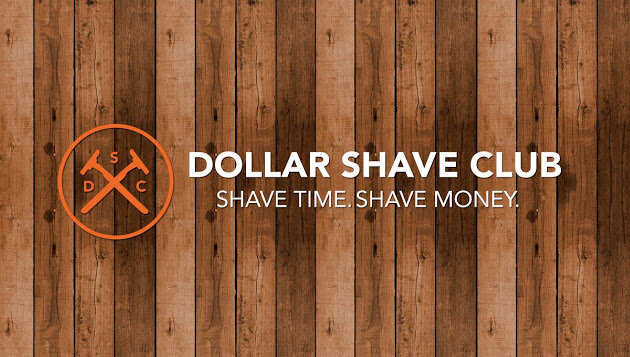
5 Things Your Brand Identity Should Have by Anastasia Salazar

ASL_Design-Blog-5-things-your-brand-identity-should-have-image_Website.png

So you’ve already identified the foundational elements of your brand and brand strategy. Now, you’re ready to dive in a little deeper. If you’re hoping to create an unforgettable brand, one of the best things you can do is establish a thorough brand identity. Brand identities usually take the form of a brand book — essentially, a document that sets distinct guidelines for maintaining branding across all aspects of the business.

Brand books, also known as brand bibles, are instrumental in helping companies create and maintain a consistent message and presence — and that can pay off in a big way. Consistent branding increases revenue by an average of 33 percent, yet less than 10 percent of companies say their branding is “very consistent.” 

Staying consistent takes effort, and even more importantly, it takes guidelines. The exact information included will differ from company to company, but there are some things that all brand identities should have in common —  here are a few of the most crucial ones.

1. A Unifying Brand Identity Theme

Your brand identity may contain a lot of different parts, but it should feel like one cohesive unit. That’s why brand identities should always be built around one solid concept or vision. The unifying factor itself can be any number of things — a look, a feel, a vibe — but no matter what, it should be unique and make sense for your business.

Let's say your company offers a customized vitamin product. Maybe after digging into your values and goals, you realize that your mission is all about helping people navigate their health. You could then take this concept of navigation and incorporate it into your brand identity design, maybe by taking a common navigation symbol, like a compass, and using that as the company’s icon.
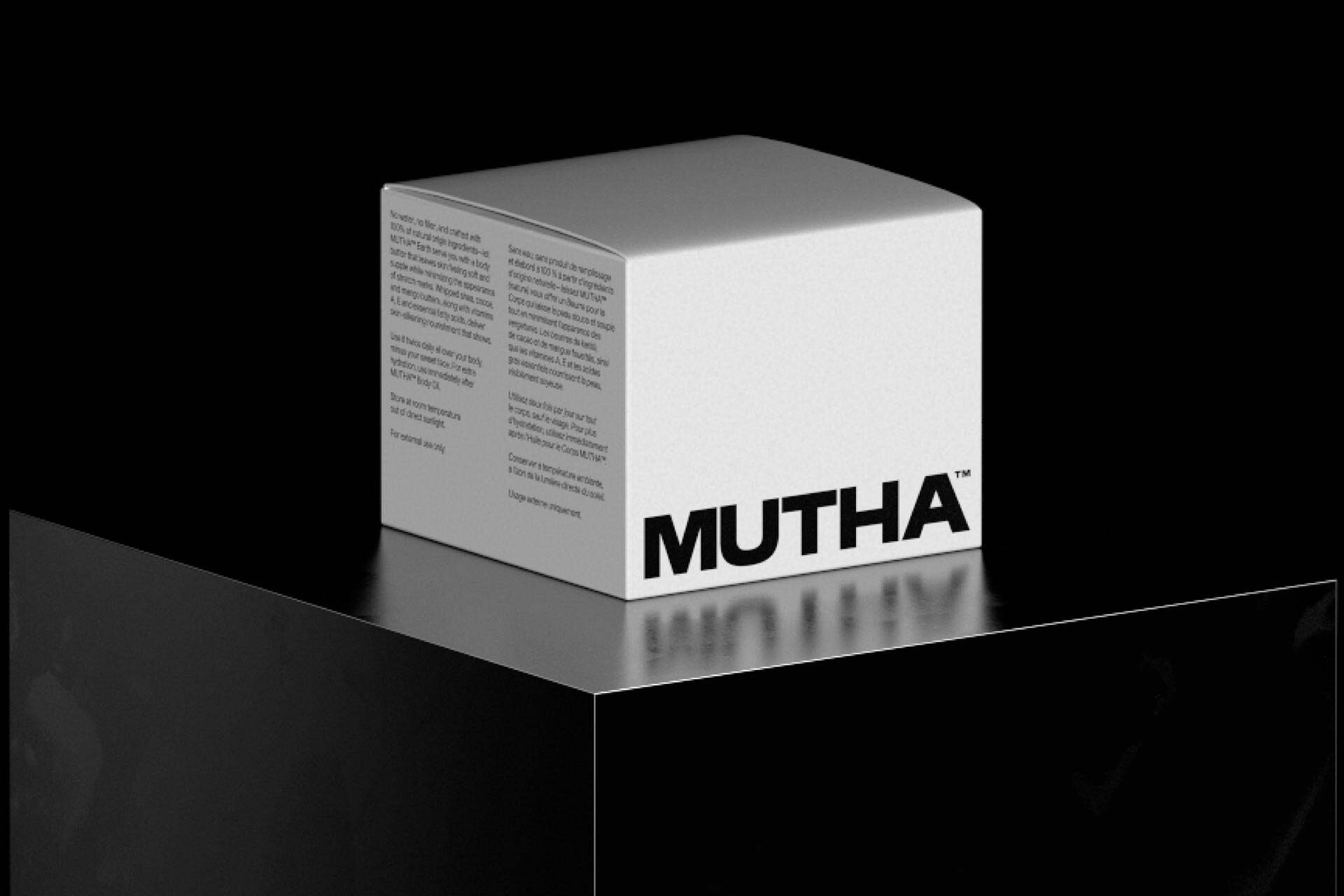
Whatever you choose as your overarching theme, the key is to make a connection with consumers so you’re able to hold a special place in their hearts and minds. 

2. Logo & Usage Guidelines

As the most critical component of your brand identity design, your logo will of course need to be included in your brand book. But this means more than just slapping your logo on a page and calling it a day. Display not only your original logo, but also all of its different color schemes (e.g. full color, grayscale) and lockups (e.g. vertical, horizontal). 

Make sure to also create rules around the usage of your logo, such as the minimum size that the logo must be for digital or print and how much clear space is required around the logo to create a buffer between it and any other content that appears alongside it. But just as important as the “dos” are the “don’ts” — for example, don’t flip the logo or alter the proportions.


ASL-Design-Blog-5-things-your-brand-identity-should-have-logo

3. Color Palette

Your brand colors will need to include more than just what appears on your logo. Yes, most brands will have one primary color, but to keep the design on your various marketing materials engaging, you should ideally include a set of secondary colors as well, including some neutrals.  

It’s important to remember, too, that not all blacks/grays/shades are the same. If you truly want to maintain consistency, include RGB (digital) and CMYK (print) breakdowns for each of your brand colors listed, as well as your hex code and an identified Pantone swatch. 

ASL-Design-Blog-5-things-your-brand-identity-should-have-color-palette

4. Typography

Typography and all of its components — typeface, kerning, hierarchy, etc. — play an important role in expressing your brand personality. Sans serif typefaces generally evoke a modern look, while serif typefaces have more of a classic feel to it. Usually, brands will include at least two typefaces in their brand books: one for headers, titles, or display typography, and another for body copy. When choosing typefaces, you’ll need to have one that either works well for web design or matches digital typefaces that are similar to your primary one.
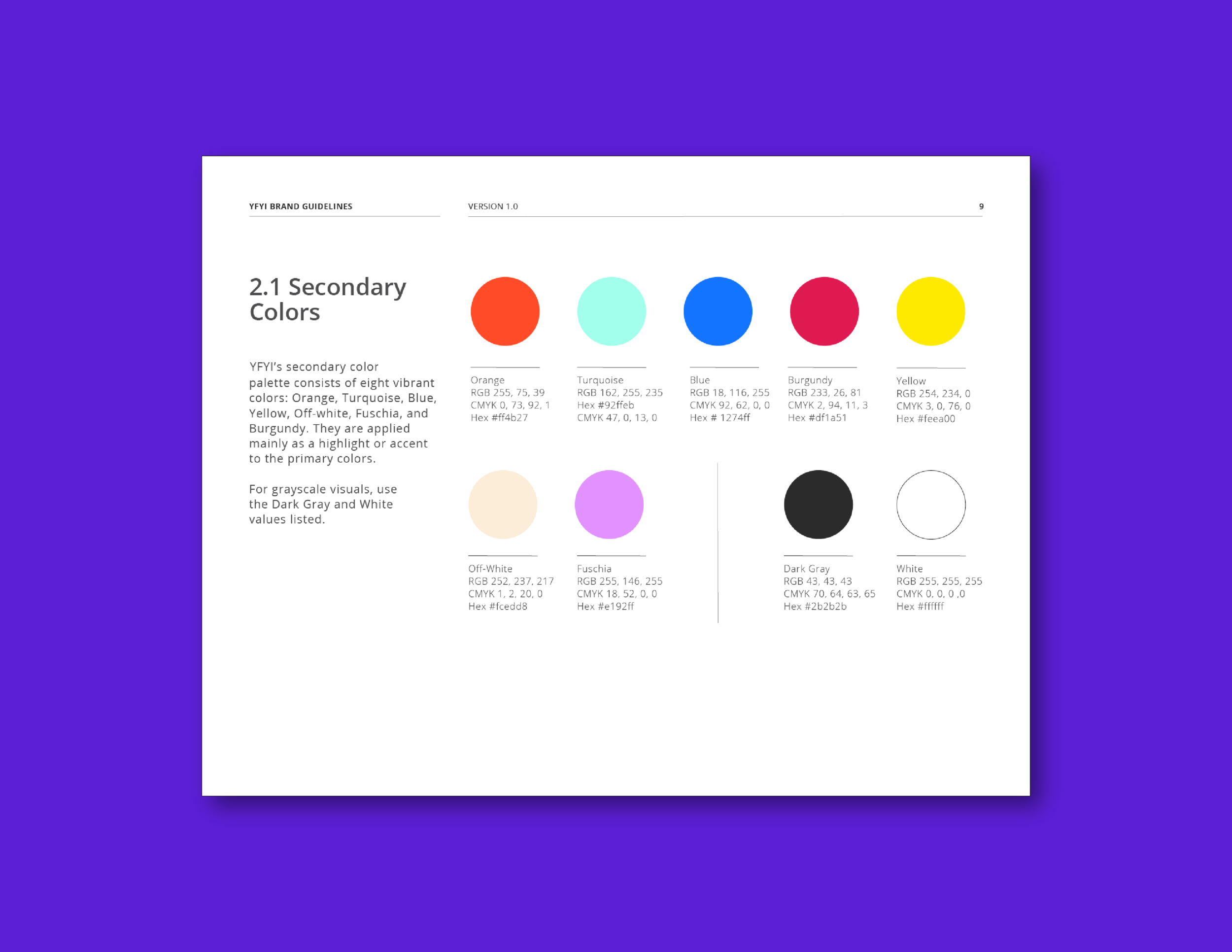
Just as you did with your logo, you should include usage guidelines around your typography, including when and where each typeface is used — for example, is the display typography only used for headers, or can it be used in CTA buttons as well?  

YFYI_Brandbook_Select-page_mockups_v1-04.pngASL-Design-Blog-5-things-your-brand-identity-should-have-typography

5. Other Design Elements

Think of any other design elements you’ll need to use (illustration, icon sets, photography, etc.) and provide guidelines around their usage so that they complement the rest of your brand identity. Not only will this help you stay consistent — it will provide direction and clarity for any other future team members or partners that will be creating imagery featuring your brand. When in doubt, more information is better than less. Think about the specifics that you should include so that even someone that’s new to your brand can maintain consistency with what’s been done in the past.

There’s virtually no limit to the other sections you could choose to add to your brand book, such as layouts, messaging, marketing templates, co-branding and social media, to name just a few. What exactly you need to add will become apparent over time, but concrete rules around theme, logos, color, typography and other design elements will provide you with a solid foundation to build on.

And remember, your brand book doesn’t need to be set in stone! It’s a living, breathing document that can be adapted and updated as needed — just make sure to include a sign off at the beginning to keep track of how up-to-date yours is, and who’s been editing it. Refreshing your brand identity design regularly — every three to five years — will help keep your brand relevant and effective, ensuring that your brand evolves as the market does.

ASL-Design-Blog-5-things-your-brand-identity-should-have-layouts

Anastasia Salazar Ltd. is an independent design studio for tailored branding and digital designs. Reach out to learn how we can help you fuel growth and maximize your brand’s impact.